

Best Cat Grooming Brushes 2026: Top Picks for Every Coat
Table of Contents
- Why the Right Cat Grooming Brush Matters More Than You Think
- Cat Coat Types and Grooming Needs: Matching the Tool to the Fur
-
The 7 Best Cat Grooming Brushes of 2026
- 1. SteamFresh Cat Grooming Brush: The Gentle All-Rounder
- 2. Slicker Brush: The Standard for Detangling and Undercoat
- 3. Deshedding Tool: For Heavy Shedders
- 4. Bristle Brush: The Finishing Touch for Shine
- 5. Grooming Glove: For Cats Who Hate Brushes
- 6. Pin Brush: For Long-Haired Breeds
- 7. Comb: For Finishing and Flea Checks
- How to Groom a Cat at Home: A Step-by-Step Routine
- What to Look For in a Cat Brush: Our Selection Criteria
- Conclusion
- Frequently Asked Questions
Last Updated: September 4, 2026
Why the Right Cat Grooming Brush Matters More Than You Think
Cats spend up to half their waking hours grooming, yet they still need our help managing loose fur, dander, and tangles (peer-reviewed research). Choosing the best cat grooming brushes 2026 has to offer isn't just about a shiny coat; it directly affects your cat's comfort and your home's cleanliness. Regular brushing reduces hairballs, distributes natural oils for healthier skin, and turns a chore into bonding time.

A common mistake is buying one brush and expecting it to work for every cat. Coat type, fur density, and even your cat's temperament determine which tool will actually get used. This guide from The Pet Grove breaks down the top brush categories, explains what makes each one effective, and helps you match the right tool to your feline friend.
Cat grooming brushes fall into several distinct types, each designed for a specific job. But first, here's what most guides get wrong: they recommend tools without considering the cat's skin sensitivity or the owner's grooming confidence.
Cat Coat Types and Grooming Needs: Matching the Tool to the Fur
Understanding your cat's coat type is the foundation of effective grooming. Cats generally fall into four categories: short-haired, long-haired, medium-haired, and hairless breeds. Each requires a different approach to fur maintenance and a different frequency of grooming sessions.
Short-haired cats have a dense topcoat with a fine undercoat. They shed noticeably during seasonal changes, and a weekly grooming routine keeps loose hair under control. Long-haired breeds like Persians and Maine Coons need daily attention to prevent matting and tangles in their luxurious fur (avma.org). Their grooming needs go beyond simple brushing, requiring tools that reach the undercoat without pulling painfully at the skin.
Medium-haired cats fall between these extremes, with feathering that tangles easily around the legs and tail. Even hairless breeds benefit from gentle wiping and occasional brushing to distribute skin oils. The table below summarizes how coat type drives your brush selection:
| Coat Type | Grooming Frequency | Best Tool Type | Primary Concern |
|---|---|---|---|
| Short-haired | 1-2 times weekly | Bristle brush or grooming glove | Loose hair and dander |
| Medium-haired | 3-4 times weekly | Slicker brush and comb | Tangles and seasonal undercoat |
| Long-haired | Daily | Pin brush and deshedding tool | Matting and hairballs |
| Hairless | Weekly wipe-down | Soft cloth or gentle glove | Skin oil buildup |
The 7 Best Cat Grooming Brushes of 2026
We evaluated dozens of grooming tools based on comfort, effectiveness, and durability. Our selection covers every coat type and addresses the specific needs of cats who resist grooming. These picks represent the best cat grooming brushes 2026 offers across all categories.
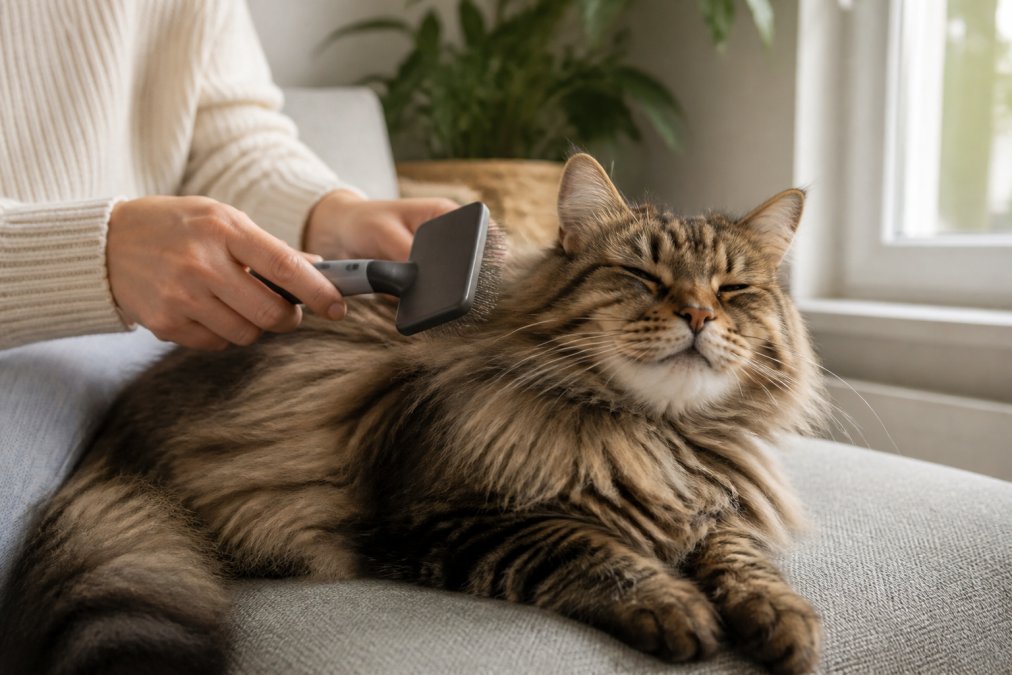
1. SteamFresh Cat Grooming Brush: The Gentle All-Rounder
Our top pick for most cats is the SteamFresh Cat Grooming Brush from The Pet Grove. This 3-in-1 design combines grooming with a gentle steam feature that helps loosen dirt and loose fur while soothing sensitive skin. The USB-rechargeable design means no cords to wrestle with, and the self-cleaning mechanism simplifies post-grooming cleanup.
What sets this brush apart is how it addresses the emotional side of grooming. The warm steam relaxes anxious cats, turning a potentially stressful experience into a calming ritual. At $12.59, it delivers premium features without the premium price tag. The ergonomic handle fits comfortably in your hand, and the compact size works well for cats who dislike large tools near their face.
2. Slicker Brush: The Standard for Detangling and Undercoat
A slicker brush features fine, short stainless steel teeth angled close together, making it the go-to tool for removing mats, tangles, and loose undercoat fur. The slightly bent wire tips reach deep into the coat without scratching the skin, which is why veterinary professionals frequently recommend this design for medium and long-haired cats.
Look for a model with a padded base, which flexes to follow your cat's contours and prevents the teeth from pressing too hard against the skin. Slicker brushes excel at detangling but require a gentle touch. Pressing too firmly can irritate sensitive skin, so let the brush glide through the fur rather than forcing it through knots.
3. Deshedding Tool: For Heavy Shedders
For cats that seem to produce their own body weight in loose hair every spring, a deshedding tool is the answer. These tools use a row of closely spaced stainless steel teeth to reach the undercoat and safely remove loose hair at the follicle level without cutting the topcoat.
The best deshedding tool for cats reaches deep enough to capture the loose undercoat that causes most shedding and hairballs. Use it before your slicker brush to remove the bulk of dead fur, then follow with the slicker to catch any remaining tangles. Limit deshedding sessions to 10-15 minutes to avoid overstimulating the skin.
4. Bristle Brush: The Finishing Touch for Shine
A bristle brush has natural or synthetic bristles that distribute the skin's natural oils through the topcoat, creating that healthy, glossy finish. While it won't remove significant undercoat, it polishes the fur and removes surface dander and dust.
Bristle brushes suit short-haired cats perfectly and serve as an excellent finishing step for longer coats after you've addressed tangles and undercoat. The gentle sensation often feels like petting, making this a good option for cats who are nervous around metal teeth. For cats with very fine or thin fur, a soft bristle brush provides all the grooming they need.
5. Grooming Glove: For Cats Who Hate Brushes
Some cats recoil at the sight of any handheld tool. For these sensitive souls, a grooming glove offers a stealth approach. The glove looks like an ordinary petting session, but the silicone tips on the palm and fingers catch loose fur as you stroke your cat.
Grooming gloves work best on short-haired cats and as a supplementary tool for other coat types. They excel at removing surface loose hair and are particularly useful for cats who associate brushes with negative experiences. The glove also gives you a chance to check your cat's skin for bumps, scratches, or irritation during grooming, supporting overall feline hygiene and dermatological health.
6. Pin Brush: For Long-Haired Breeds
A pin brush resembles a human hairbrush, with widely spaced metal pins topped with protective tips. This design works through long, thick fur to remove tangles and debris while minimizing static electricity that can make fur stand on end.
Long-haired breeds benefit most from starting their grooming routine with a pin brush to work through the outer coat before addressing the undercoat. The protective tips on the pins make this a comfortable option for cats with sensitive skin. Choose a pin brush with rounded tips and flexible pins that bend rather than snag when they encounter a knot.
7. Comb: For Finishing and Flea Checks
A metal comb with both wide and narrow teeth serves multiple purposes. The wide teeth work through tangles, while the narrow side catches fleas, flea dirt, and any remaining loose hair. Combs provide the precision finishing that brushes miss, particularly around the face, ears, and tail.
Run a flea comb through your cat's fur regularly to check for parasites and skin issues. The comb's teeth are close enough to catch fleas and their eggs, making it an essential tool for dermatological health monitoring. For cats prone to matting behind the ears or under the chin, a comb reaches these tight spots that larger brushes cannot access.
How to Groom a Cat at Home: A Step-by-Step Routine
Learning how to groom a cat at home starts with building a routine that respects your cat's patience and comfort. Begin with short sessions of 5-10 minutes, gradually extending as your cat relaxes. Always brush in the direction of hair growth, using gentle, sweeping strokes.
Follow this simple process for a successful grooming session:
- Start with a pin brush or comb to work through any tangles in the outer coat
- Use a deshedding tool to remove loose undercoat fur, focusing on the back and sides
- Switch to a slicker brush to catch remaining loose hair and smooth the coat
- Finish with a bristle brush to distribute oils and add shine
- Check the ears, paws, and tail for mats, debris, or skin issues
- Reward your cat with a treat and praise after each session
Cats who hate being brushed often respond better to shorter, more frequent sessions. Try pairing grooming with a favorite activity, like sitting near a sunny window or playing soft music. The goal is to create positive associations so your cat learns that grooming time means comfort and attention.
What to Look For in a Cat Brush: Our Selection Criteria
Choosing the right brush comes down to matching the tool to your cat's specific needs. We prioritize comfort features like padded handles and flexible pins, effectiveness at removing loose fur without causing skin irritation, and durability for long-term use.
The table below summarizes the decision framework we recommend:
| If Your Cat... | Choose This | Frequency | Key Benefit |
|---|---|---|---|
| Has short hair and sheds moderately | Bristle brush | Weekly | Adds shine, removes dander |
| Has a thick undercoat | Deshedding tool | 2-3 times weekly | Reduces shedding dramatically |
| Is sensitive or anxious | Grooming glove or steam brush | Daily, short sessions | Builds positive associations |
| Has long, tangle-prone fur | Pin brush and comb | Daily | Prevents matting |
| Hates being brushed | Steam brush or glove | Every other day | Gentle, calming experience |
Consider your cat's age as well. Kittens need gentle tools and short sessions to build tolerance, while senior cats may have arthritis or skin sensitivities that require extra care. Adjust your grooming frequency and tool selection as your cat ages.
Conclusion
Finding the best cat grooming brushes 2026 requires matching the tool to your cat's coat type, temperament, and age. The right approach reduces shedding, prevents painful mats, and strengthens your bond through regular, positive interaction. Start with the SteamFresh Cat Grooming Brush for its gentle, calming design, and build your grooming kit from there based on your cat's specific needs.
At The Pet Grove, we understand that grooming is about more than a tidy coat. It's about your cat's comfort, health, and daily happiness. That's why we carefully select premium grooming tools like the SteamFresh Cat Grooming Brush, designed to make every session enjoyable for both of you. Our products support your pet's well-being with thoughtful, high-quality design, and our free shipping brings them directly to your door. American Veterinary Medical Association grooming guidelines emphasize the importance of regular coat care for feline health. Get started with The Pet Grove and turn grooming into the best part of your cat's day.
Frequently Asked Questions
What brushes do professional cat groomers recommend?
Professional groomers typically recommend a combination of tools: a slicker brush to remove loose fur and detangle the undercoat, a metal comb to finish and check for mats, and a deshedding tool for heavy shedders. The right choice depends on your cat's coat type. For a gentle, all-in-one option that is suitable for most cats, a steam brush like the SteamFresh can be a great starting point, as it helps loosen dirt without causing skin irritation.
What is the difference between a slicker brush and a deshedding tool?
A slicker brush has fine, short wires close together, making it ideal for removing loose fur, tangles, and mats from the topcoat and undercoat. A deshedding tool, on the other hand, features a row of longer, sturdier stainless steel teeth that reach deeper into the undercoat to pull out loose hair before it falls out. Use a deshedding tool during shedding season to reduce loose hair, and a slicker brush for regular weekly grooming to keep the coat smooth and free of tangles.
Which brush is best for long-haired cats prone to matting?
For long-haired cats, a pin brush is often the best first step, as it gently works through tangles without pulling the skin. Follow up with a slicker brush to remove loose undercoat fur and finish with a wide-toothed metal comb to catch any small mats you might have missed. Regular brushing, at least every other day, is crucial for long-haired cats to prevent painful mats from forming. A steam brush can also help soften stubborn tangles, making them easier and less stressful to remove.
How often should you brush your cat to reduce shedding?
For most cats, a weekly grooming routine is sufficient to keep loose hair under control. However, during shedding season (typically spring and fall), you may need to brush every day or every other day. Short-haired cats might only need a weekly session, while long-haired cats usually require more frequent grooming, around 3-4 times per week, to prevent matting and reduce hairballs. The goal is to remove excess fur before it ends up on your furniture or is ingested by your cat.
This article was written using GrandRanker


