

How to Maintain Cat Coat Hygiene: A 2026 Guide
Table of Contents
- Why Regular Brushing Matters for Cat Coat Health
- Best Grooming Tools for Cats and How to Use Them
- How Often to Brush a Cat: Finding Your Cat's Routine
- Cat Coat Health Diet: Nutrition That Strengthens Hair Follicles
- How to Clean Cat Fur Without Bathing: Dry Grooming Techniques
- Identifying and Managing Mats, Tangles, and Shedding
- When to Bathe Your Cat and Professional Grooming Considerations
- Breed-Specific and Age-Related Grooming Needs
Last Updated: August 27, 2026
Why Regular Brushing Matters for Cat Coat Health
Regular brushing removes loose fur, prevents matting, and distributes natural oils that keep your cat's skin hydrated and their fur lustrous. It prevents skin issues, reduces hairballs, and catches early signs of health problems. Loose undercoat traps dirt, dander, and debris close to the skin, becoming matted and uncomfortable when left unchecked.
Brushing stimulates sebum production, the natural oil that protects hair follicles and maintains skin hydration. This is why regularly brushed cats have shinier, healthier-looking coats. The process also improves circulation to the skin, promoting overall dermatological health. Regular grooming lets you spot parasites, unusual lumps, or skin irritation early, making treatment far simpler.
Best Grooming Tools for Cats and How to Use Them
The right tools make grooming easier for both you and your cat. Different coat types and conditions require different approaches.
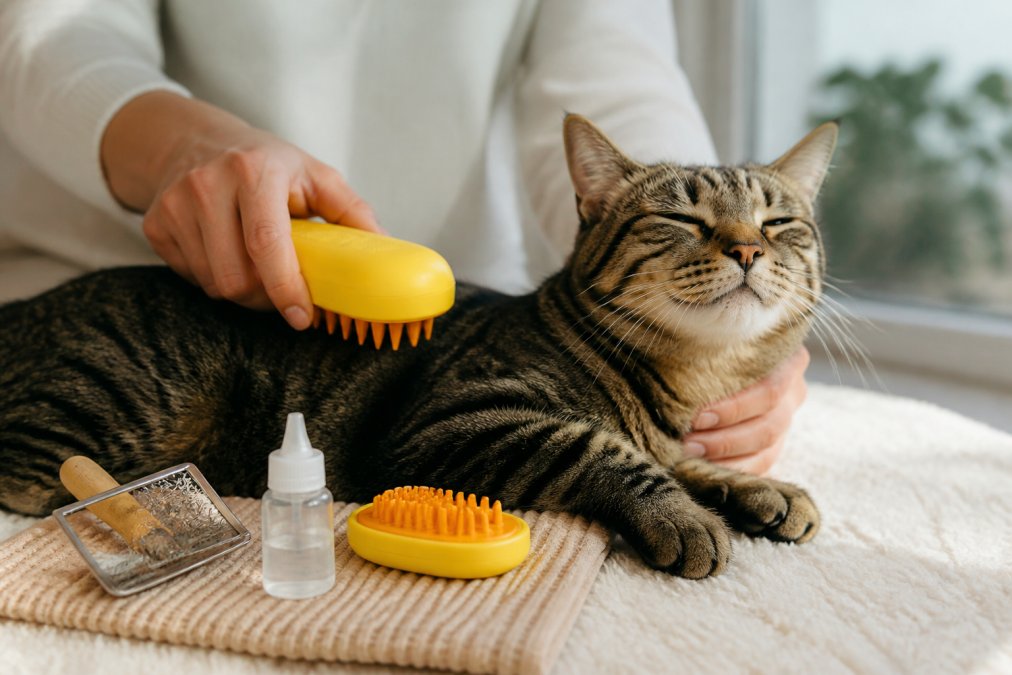
A slicker brush is the workhorse of cat grooming. It has fine, short wires close together on a flat or slightly curved surface, ideal for removing mats, tangles, and loose fur from both the topcoat and undercoat. Use gentle, short strokes in the direction of hair growth. Never force the brush through a mat, as this causes pain and damages the coat.

For cats with sensitive skin or those prone to matting, a grooming mitt offers a gentler alternative. These soft, textured gloves let you groom while petting, which many cats find less intimidating than traditional brushes. The Pet Grove's SteamFresh Cat Grooming Brush combines grooming with gentle steam, making it particularly effective for anxious cats. The steam helps loosen loose fur and debris while providing a soothing sensation.
A metal comb is essential for checking your work after brushing and for detecting fleas and flea dirt early. For longer coats, a de-matting tool or mat splitter breaks apart stubborn tangles without cutting hair. Use these tools only on mats that won't come out with a brush, working gently to avoid irritating the skin underneath.
How Often to Brush a Cat: Finding Your Cat's Routine
Brushing frequency depends on your cat's coat type, age, and overall health. Short-haired cats typically need brushing 2-3 times per week, while long-haired cats require daily attention to prevent matting and manage shedding.
Cats with undercoats shed more heavily during seasonal transitions. Increase brushing to daily sessions during these periods. Age matters too, senior cats often have drier, more fragile skin prone to matting and are less able to groom themselves effectively.
Watch your cat's behavior and coat condition to guide your routine. If you're finding mats or excessive loose fur, increase brushing frequency. If your cat's coat looks healthy and mat-free, your current routine is working. The goal is consistency, a predictable schedule your cat learns to expect and tolerate.
Cat Coat Health Diet: Nutrition That Strengthens Hair Follicles
What your cat eats directly affects coat quality. Hair follicles require specific nutrients to grow strong. High-quality protein is the foundation, cats are obligate carnivores and their coats reflect the quality of protein they consume.
Look for foods with named meat sources as the primary ingredient: chicken, turkey, fish, and beef provide essential amino acids that hair follicles need. Avoid vague protein sources like "meat meal" or "animal by-products."
Omega-3 fatty acids play a critical role in skin hydration and reducing inflammation (peer-reviewed research). Fish-based proteins naturally contain omega-3s, but some cats benefit from additional supplementation, especially those with dry or flaky skin. Essential vitamins and minerals like biotin, zinc, and vitamin E support hair growth and skin health. Most quality commercial cat foods contain these nutrients adequately, but cats with specific health conditions may need targeted nutrition.
Limited ingredient foods can be particularly helpful for cats with sensitivities. If your cat has chronic skin issues or dull fur despite good grooming habits, food allergies might be the culprit. Working with your veterinarian to identify problematic ingredients often improves coat condition dramatically.
How to Clean Cat Fur Without Bathing: Dry Grooming Techniques
Most cats dislike water, and bathing creates stress that outweighs the benefits for indoor cats. Dry grooming techniques are far more practical for maintaining cat coat hygiene without trauma.
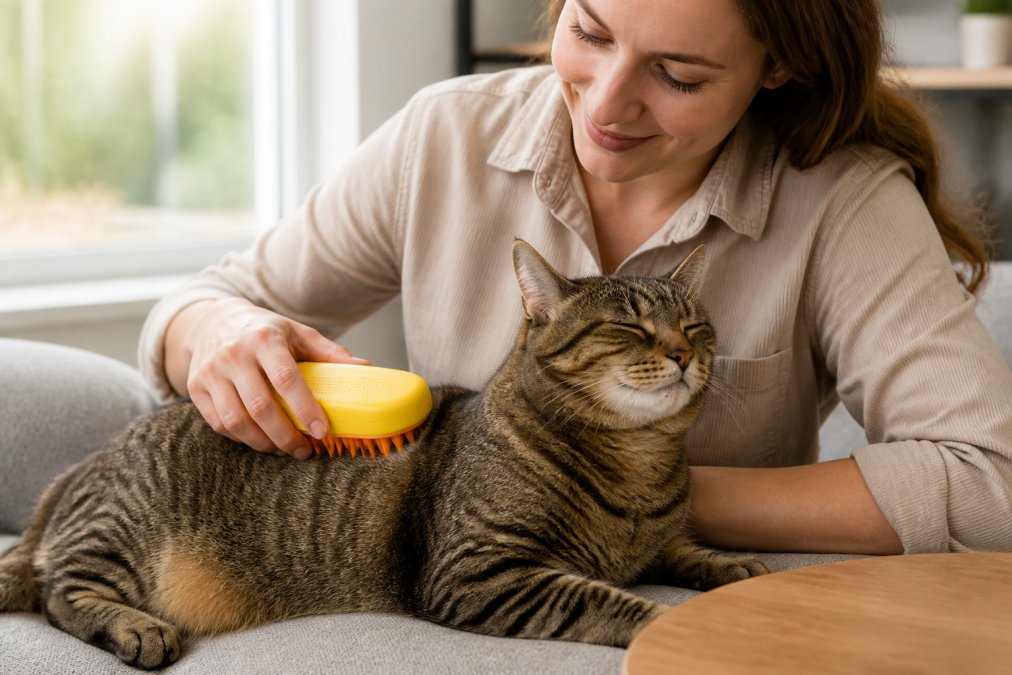
Dry shampooing removes dirt and odors without water. These powder or spray products absorb oils and debris, which you then brush out. Apply the dry shampoo to your cat's coat in small sections, work it in gently, then brush thoroughly.
Regular brushing itself removes dirt and debris that accumulates on the coat. Loose fur traps dust and environmental particles close to the skin; removing that loose fur eliminates the problem. For cats with oily coats or those that get into sticky situations, a damp cloth or pet wipe can spot-clean specific areas without a full bath.
Grooming mittens offer a gentle way to remove loose fur and surface debris. Many cats tolerate this method far better than traditional brushes. The Clinical Care Hypoallergenic Pet Shampoo from The Pet Grove is formulated for cats that genuinely need bathing. This fragrance-free, soap-free formula contains vitamin E and lactic acid to support skin health during the bathing process.

Identifying and Managing Mats, Tangles, and Shedding
Mats form when loose fur becomes tangled and compressed against the skin. They're uncomfortable, trap moisture that can lead to skin infections, and become increasingly difficult to remove the longer they persist. Prevention through regular brushing is far easier than dealing with severe matting.
Early tangles are easy to remove with a slicker brush. Work gently from the outside of the tangle inward, using short strokes. Never pull forcefully, as this damages the coat and causes pain. If the tangle resists, use a de-matting tool designed to split mats apart without cutting hair.
Shedding is natural, especially during seasonal transitions. Regular brushing removes loose fur before it ends up on your furniture or gets ingested during self-grooming. Excessive shedding can indicate allergies, stress, poor nutrition, or skin conditions. If your cat is shedding more than usual despite regular grooming, consult your veterinarian.
The Fresh Coat Pet Conditioner from The Pet Grove is specifically designed to reduce mats and tangles while leaving the coat soft and manageable. A conditioned coat is less prone to matting and tangles, making your grooming routine more effective.

When to Bathe Your Cat and Professional Grooming Considerations
Most indoor cats never need a bath. However, certain situations warrant water-based bathing: outdoor cats that get genuinely dirty, cats with skin conditions requiring medicated shampoo, or situations where your cat gets into something hazardous.
If bathing becomes necessary, brush your cat thoroughly first to remove mats and loose fur. Gather all supplies before starting, shampoo, towels, a non-slip mat, and treats. Use lukewarm water and avoid getting water in your cat's ears or eyes.
Professional groomers offer value for long-haired cats or those with severe matting. A professional has specialized tools and experience handling difficult cats. For most cat owners, professional grooming every 6-8 weeks for long-haired cats or as-needed for short-haired cats is reasonable. Some cats benefit from professional grooming for behavioral reasons, a professional's experience can make the process less traumatic. According to veterinary grooming guidelines, regular professional grooming helps identify health issues that might otherwise go unnoticed.
Breed-Specific and Age-Related Grooming Needs
Different breeds have dramatically different grooming requirements. Persian and Himalayan cats have long, dense coats that mat easily and require daily brushing. Maine Coons have semi-long coats that need regular maintenance but are less prone to matting. Short-haired breeds like Siamese or British Shorthairs need less frequent brushing but still benefit from regular grooming to manage shedding.
Age dramatically affects grooming needs. Kittens have delicate skin and thin coats requiring gentle handling. Starting grooming early builds positive associations that make adult grooming far easier. Senior cats present unique challenges, their skin becomes more fragile, their coats often become drier and more prone to matting, and their flexibility decreases. Older cats benefit from more frequent, gentle grooming sessions.
Cats with chronic health conditions need adapted grooming routines. Arthritic cats may be unable to groom themselves effectively, requiring more frequent human grooming. Discuss your senior or chronically ill cat's specific grooming needs with your veterinarian. Research from feline dermatology studies shows that age-appropriate grooming routines significantly improve skin health and comfort in senior cats.
Maintaining cat coat hygiene is one of the most impactful things you can do for your cat's health and comfort. A consistent grooming routine, quality tools, and proper nutrition create a foundation for a healthy, lustrous coat throughout your cat's life. The Pet Grove offers specialized grooming tools like the SteamFresh Cat Grooming Brush and professional-grade conditioners designed to make your grooming routine more effective. Start with a routine that matches your cat's coat type and age, adjust based on what you observe, and remember that a cat desensitized to grooming from an early age will tolerate it far better throughout their life.
| Grooming Task | Frequency | Best Tool | Purpose |
|---|---|---|---|
| General brushing | 2-3x weekly (short hair), daily (long hair) | Slicker brush or grooming mitt | Remove loose fur and prevent mats |
| Mat removal | As needed | De-matting tool or metal comb | Address tangles before they worsen |
| Undercoat management | Daily during shedding season | Slicker brush | Manage seasonal coat transitions |
| Nail trimming | Every 2-3 weeks | Cat nail clippers | Maintain paw health |
| Ear cleaning | Weekly or as needed | Soft cloth or pet wipes | Monitor for infections or debris |
Frequently Asked Questions
How often should you brush your cat to maintain coat hygiene?
Brush short-haired cats 2-3 times per week to remove loose fur and prevent matting. Long-haired cats need daily brushing to maintain coat health and reduce shedding. Cats with undercoat issues may benefit from more frequent grooming sessions. Adjust frequency based on your cat's individual shedding patterns and coat texture. Regular brushing also improves skin hydration and sebum distribution.
What diet changes help improve a cat's coat quality?
Feed high-quality protein sources that support hair follicle strength and coat luster. Include omega-3 fatty acids from fish or supplements to reduce dander and improve skin hydration. Essential vitamins like biotin and zinc support dermatological health. Look for foods with balanced nutrition. Consult your veterinarian about nutritional supplements if your cat's coat appears dull or lacks texture.
Is it okay to never bathe an indoor cat?
Most indoor cats maintain their coat naturally and rarely need bathing. However, occasional baths may help with severe matting, excessive shedding, or skin conditions. If your cat resists water, dry grooming and regular brushing are effective alternatives. Use hypoallergenic shampoo formulas if bathing becomes necessary. Desensitization through positive reinforcement can help anxious cats tolerate bathing when needed.
How do I clean my cat's fur without giving a bath?
Use a grooming mitt or slicker brush to remove loose fur and debris daily. Steam-assisted grooming tools help loosen matted fur gently. Dry shampoo products designed for cats can freshen the coat between baths. Focus on areas prone to matting and tangles. Regular dry grooming prevents the need for frequent bathing while maintaining coat hygiene and reducing hairball formation.
This article was written using GrandRanker


