

7 Natural Remedies for Pet Anxiety in 2026
Table of Contents
- Natural Remedies for Pet Anxiety: What Works
- Quick Comparison Table
- 1. Hemp and Herbal Calming Chews
- 2. Functional Treats with Adaptogenic Ingredients
- 3. Benefits of Puzzle Feeders for Anxious Pets
- 4. Orthopedic Beds for Senior Dogs with Anxiety
- 5. How to Calm a Dog with Separation Anxiety
- 6. Interactive Enrichment Toys for Mental Stimulation
- When to Combine Remedies for Best Results
- Frequently Asked Questions
Last Updated: September 18, 2026
Natural Remedies for Pet Anxiety: What Works
Pet anxiety affects millions of dogs and cats, and natural remedies pet anxiety management has become increasingly popular among pet owners seeking alternatives to medication. Signs range from destructive behavior during storms to excessive barking when owners leave home. Finding the right approach requires understanding what actually calms your pet, and what's backed by real results rather than marketing hype.
This guide from The Pet Grove covers practical, evidence-based natural remedies pet anxiety solutions that pet owners report using successfully. We've organized the most effective natural approaches so you can choose what fits your pet's specific anxiety triggers and your lifestyle.
The remedies covered here fall into three categories: supplements and herbal formulas, environmental comfort solutions, and enrichment strategies that reduce anxiety through mental stimulation. Each addresses anxiety differently, and many pet parents find the best results come from combining multiple approaches rather than relying on a single fix.
Quick Comparison Table
| Remedy Type | Best For | How It Works | Cost Range | Time to Effect |
|---|---|---|---|---|
| Hemp and herbal chews | General anxiety, travel stress | Calming botanical ingredients | $20-35 | 30-60 minutes |
| Adaptogenic treats | Stress relief, behavioral support | Functional ingredients like ashwagandha | $30-35 | 45 minutes-2 hours |
| Puzzle feeders | Separation anxiety, mental stress | Mental engagement and foraging | $11-16 | Immediate distraction |
| Orthopedic beds | Senior dogs, chronic anxiety | Comfort and safe space creation | $17-44 | Immediate comfort |
| Separation anxiety strategies | Anxiety when alone | Behavioral conditioning + comfort items | Varies | Days to weeks |
| Interactive toys | Boredom-related anxiety | Active play and enrichment | $13-26 | Immediate engagement |
1. Hemp and Herbal Calming Chews
Hemp-based supplements have become a popular choice for pet owners managing anxiety. These soft chews typically combine hemp with additional calming botanicals like chamomile and valerian root, ingredients traditionally used to support relaxation in both humans and animals.


The Hemp Calming Chews for Dogs from The Pet Grove feature a formula designed specifically for dogs facing travel, routine changes, or other stressful situations. They're available in multiple serving sizes based on your dog's weight, making dosing straightforward. At $23.49, they offer an accessible entry point for pet parents new to natural anxiety support.
What makes this approach practical: you can give the chews before a known stressor (thunderstorm forecast, grooming appointment, car ride) rather than committing to daily medication. Most pets show calming effects within 30 to 60 minutes. The soft chew format means no pills to hide in food or struggle with administration.
The trade-off is consistency. These work best as situational support, not long-term solutions for chronic separation anxiety. If your dog needs daily anxiety management, you may need a complementary strategy.
2. Functional Treats with Adaptogenic Ingredients
Adaptogenic herbs like ashwagandha, reishi, and turmeric have gained attention for their potential to help the body manage stress response. Unlike sedating ingredients, adaptogens are designed to support the nervous system's ability to handle stress naturally.
The Healthybud Calming Aid in duck flavor combines hemp with these functional ingredients plus yucca, creating a treat that works both as a standalone snack and as a topper for regular meals. At $34.94 for a 2-pack, it's priced higher than basic chews but offers versatility, you can use it as a training reward, meal topper, or standalone treat during stressful moments.
The duck base makes this option particularly useful for dogs with chicken sensitivities, a common trigger for reactions in rescue dogs or those with limited-ingredient diets. The dual-use format (treat or topper) means you're not locked into one application.
One consideration: adaptogenic effects develop over time with consistent use. This isn't an emergency calm-down tool like a single chew before a thunderstorm. Many pet parents report better results when used regularly over 2-3 weeks, allowing the ingredients to build in your dog's system.
3. Benefits of Puzzle Feeders for Anxious Pets
Mental stimulation is one of the most underrated anxiety management tools. When pets engage their minds through problem-solving, their nervous system shifts from stress mode to focused engagement. Puzzle feeders and interactive toys create that mental work during feeding time.
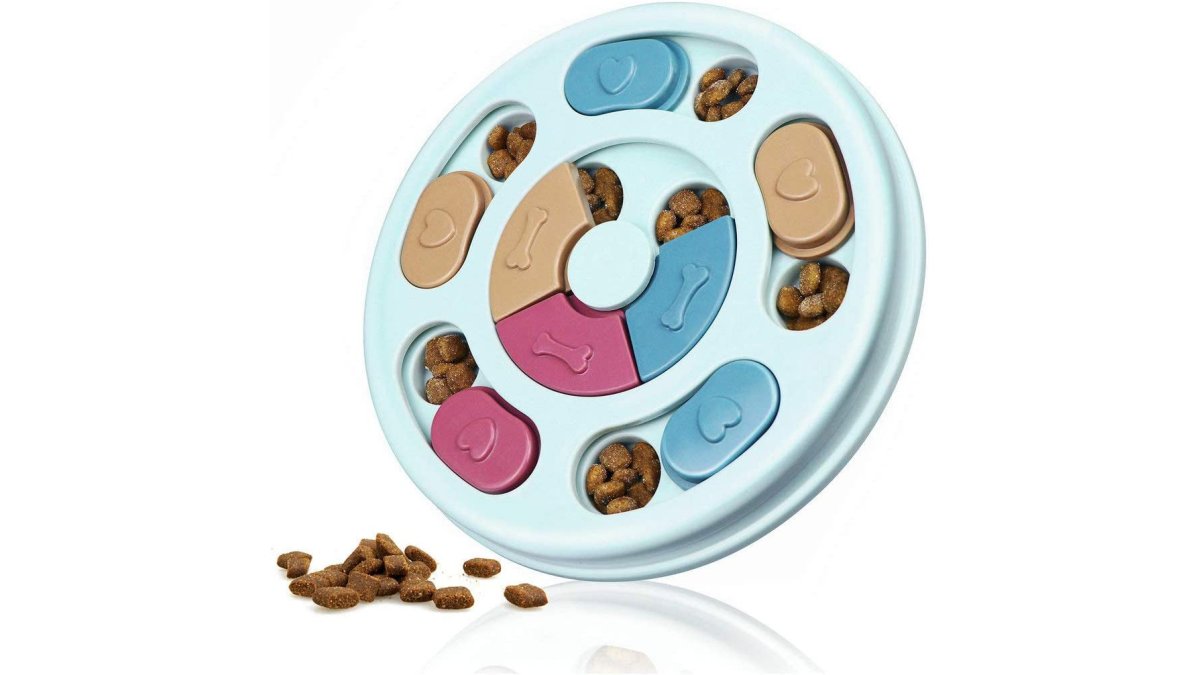
The Interactive Treat Puzzle Toy from The Pet Grove ($11.55) turns snack time into a brain game. Dogs must move pieces and discover hidden treats, which redirects anxious energy into rewarding problem-solving. This works particularly well for dogs with separation anxiety because you can fill the puzzle before you leave, giving them a task that occupies their attention during your absence.
Puzzle feeders serve multiple purposes. They slow down fast eaters, reduce boredom-related destructive behavior, and create positive associations with alone time. A dog focused on extracting treats from a puzzle toy isn't fixating on your departure or developing stress behaviors.
The practical advantage: this is a one-time purchase that works indefinitely. Unlike chews or treats, you refill the puzzle with your dog's regular food or small treats. It's cost-effective and works for small, medium, and large dogs.
Start with easier puzzles if your dog is new to this format. Some dogs need encouragement to engage. Placing a small treat on top of the puzzle or showing them how it works builds confidence before leaving them alone with it.
4. Orthopedic Beds for Senior Dogs with Anxiety
Anxiety in senior dogs often ties directly to physical discomfort. Joint pain, arthritis, and reduced mobility create stress that compounds behavioral anxiety. Providing proper orthopedic support addresses both the physical and emotional components of their anxiety.

The CozyNest Plush Pet Bed from The Pet Grove ($17.57) offers a nest-style design that creates a cozy, enclosed space, the type of safe haven anxious dogs naturally seek. The soft plush surface provides comfort, and the nest shape gives dogs a defined territory where they can retreat when stressed.
Orthopedic benefits matter especially for senior dogs. A supportive bed reduces pressure on joints, improving sleep quality and reducing nighttime anxiety. Better rest directly impacts daytime stress levels. Many pet parents report that anxious senior dogs become noticeably calmer within days of switching to a proper orthopedic bed.
For larger dogs, the CozyShield Waterproof Pet Blanket ($43.60 for the large 60x80 version) combines orthopedic support with practical protection. The waterproof layer handles accidents common in anxious or aging dogs, while the soft sherpa feel provides comfort. The reversible design extends its lifespan, making it a durable investment.
The smaller CozyShield Pet Blanket ($21.33 for the 24x32 version) works well for small to medium dogs, offering the same waterproof protection at a lower price point.
5. How to Calm a Dog with Separation Anxiety
Separation anxiety is one of the most challenging anxiety types because it requires addressing the root cause, your dog's fear of being alone, rather than just masking symptoms. The most effective approach combines calming products with behavioral strategies.
Start by creating a safe space: a designated area (crate, room, or corner) where your dog feels secure.
6. Interactive Enrichment Toys for Mental Stimulation
Anxiety often masks itself as boredom or destructive behavior. When pets lack mental engagement, their stress response activates because their brains aren't occupied. Interactive toys redirect that energy into play and problem-solving.
When to Combine Remedies for Best Results
Most anxious pets benefit from a layered approach. A dog with separation anxiety might use:
- A hemp chew 15 minutes before you leave
- A puzzle toy filled with their regular food
- A safe space with an orthopedic bed
- A predictable departure routine
This combination addresses anxiety through calming support, mental engagement, physical comfort, and behavioral consistency. Single interventions rarely resolve anxiety completely, but strategic combinations often do.
Frequently Asked Questions
What are the best natural remedies for anxiety in dogs?
The most effective natural remedies include hemp-based calming chews with chamomile and valerian, functional treats with adaptogenic ingredients like ashwagandha and reishi, and mental enrichment through puzzle toys. Environmental changes such as creating a safe space, establishing predictable routines, and providing physical exercise also significantly reduce canine stress. Many pet owners see the best results combining multiple approaches tailored to their dog's specific anxiety triggers.
How do puzzle feeders help reduce pet anxiety?
Puzzle feeders provide mental stimulation that redirects anxious energy into problem-solving activities. When dogs engage with treat-dispensing toys, their brains focus on the task rather than anxiety triggers. This mental engagement lowers cortisol levels and creates a calming effect similar to meditation. Interactive puzzle toys are particularly useful during stressful situations like thunderstorms or when you're away, giving anxious pets a productive outlet for nervous energy.
Are natural supplements safe for long-term pet anxiety management?
Natural supplements like hemp, chamomile, and valerian are generally safe for long-term use when given at appropriate dosages following package directions. However, they are supplements, not substitutes for veterinary care. Always consult your veterinarian before starting any new supplement, especially if your pet takes other medications or has underlying health conditions. Your vet can recommend dosage guidelines based on your pet's weight and specific anxiety profile.
How can I tell if my pet has separation anxiety?
Common signs include excessive barking or meowing when you leave, destructive behavior, pacing, or accidents in the house despite being housetrained. Some pets show physical symptoms like drooling or trembling. Separation anxiety typically occurs within 15-30 minutes of your departure. If you notice these behaviors, consult your veterinarian to rule out medical issues and discuss a holistic approach combining behavioral modification, environmental enrichment, and calming aids.


