

Is a Self-Cleaning Cat Brush Worth It? 2026 Guide
Table of Contents
- How Self-Cleaning Cat Brushes Work and What They Cost
- The Benefits of Daily Cat Brushing for Shedding and Coat Health
- How to Groom a Cat at Home With a Self-Cleaning Brush
- Finding the Best Slicker Brush for Cats: Coat Types and Bristle Quality
- Long-Term Durability and Cleaning the Brush Itself
- Troubleshooting Common Self-Cleaning Cat Brush Issues
- Frequently Asked Questions
Last Updated: September 16, 2026
How Self-Cleaning Cat Brushes Work and What They Cost
A self cleaning cat brush has a built-in mechanism that releases trapped fur without you touching the bristles. Most models use a retractable pin design: press a button or slide a lever, the bristles sink into the body, and the collected hair lifts away in one piece.
Retractable Bristle Mechanisms Explained
Mechanical retraction uses a spring-loaded plate behind the bristle bed. Press the release, the plate pushes forward, the pins sink below the surface, and the hair mat slides off as one clump.
Price Breakdown: Self-Cleaning vs Traditional Brushes
Self-cleaning brushes sit in the same price band as quality traditional slickers. The trade-off is mechanical complexity: more moving parts to maintain.
| Brush Type | Typical Price Band | Cleanup Method | Best For |
|---|---|---|---|
| Traditional slicker brush | Budget to mid-range | Manual fur removal from pins | Occasional groomers |
| Self-cleaning slicker brush | Mid-range | One-press retraction | Daily grooming routines |
| Steam-assisted self-cleaning brush | Mid-range | Retraction plus steam assist | Cats with dense coats |
The Benefits of Daily Cat Brushing for Shedding and Coat Health
Daily brushing is the most effective step most owners can take against shedding and matting. It removes loose hair before it lands on your sofa and distributes natural oils through the coat.

The benefits compound:
- Shedding reduction: loose hair comes out on the brush, not your furniture
- Matting prevention: tangles get caught early, before they tighten against the skin
- Dander control: regular removal reduces the allergen load in indoor spaces
- Coat health: the massage effect stimulates circulation and spreads oils
- Early detection: you feel lumps, scabs, or tenderness while they are still minor
How to Groom a Cat at Home With a Self-Cleaning Brush
Grooming a cat at home with a self-cleaning brush takes about five minutes once your cat accepts the routine. The sequence matters more than the tool.
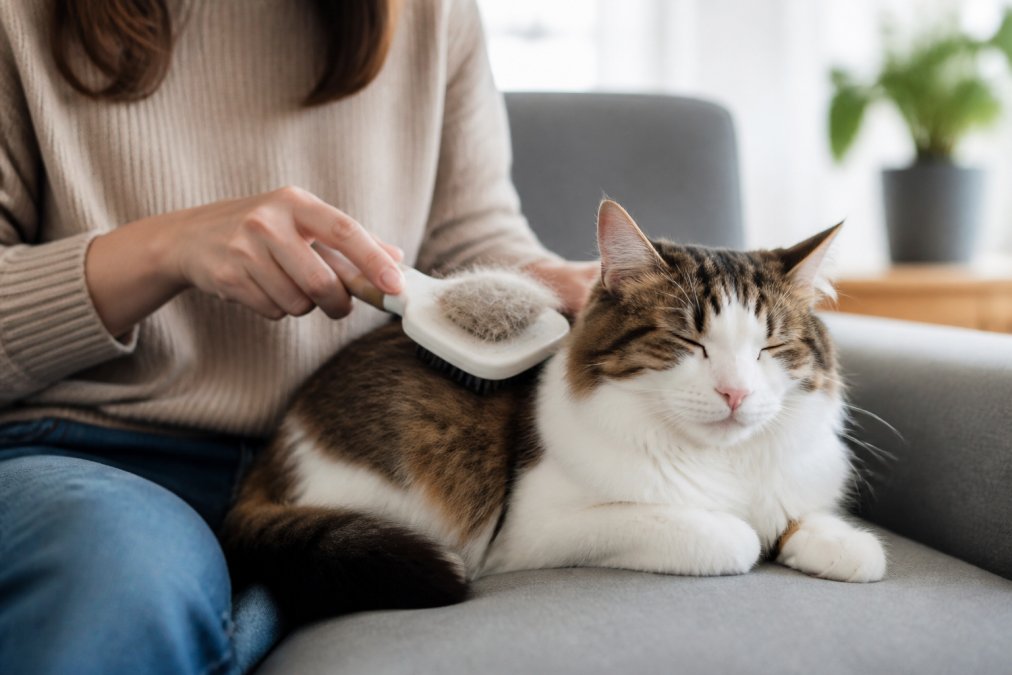
- Start when your cat is relaxed. After a meal or during a nap window works best.
- Let the cat inspect the brush first. Set it down nearby, no pressure.
- Brush the back and flanks first. These areas are least sensitive.
- Work toward the chest and belly last. Many cats only tolerate these zones briefly.
- Press the self-clean release every few passes. This prevents hair jams.
- End on a good note. Stop before your cat decides the session is over.
Total Time: 5-10 minutes Difficulty: Beginner
What You'll Need:
- A self-cleaning slicker brush
- Treats for positive reinforcement
- A quiet space
Finding the Best Slicker Brush for Cats: Coat Types and Bristle Quality
The best slicker brush for your cat depends on how well its bristles match your cat's coat type and skin sensitivity. A brush that works on a short-haired tabby can be useless on a double-coated Maine Coon, so here is a coat-specific breakdown.

Why Coat Type Changes Everything
Cat coats fall into three broad categories, each with different grooming demands:
- Short, single coat (e.g., Siamese, Burmese): Fine hair that lies close to the body, so loose fur sits on the surface rather than embedding. A medium-density slicker with fine pins is ideal, and brushing once or twice a week usually suffices.
- Short, double coat (e.g., British Shorthair, Russian Blue): A dense undercoat sheds heavily, especially in spring and fall. Use a high-density slicker with slightly stiffer pins to reach through the topcoat, and brush daily during shedding season.
- Long-haired (e.g., Persian, Maine Coon, Ragdoll): Prone to tangles and mats behind the ears, under the legs, and around the tail base. A high-density slicker with wider pin spacing prevents pulling, but detangle first with a wide-tooth comb. Self-cleaning brushes with retractable pins are a huge convenience here because hair comes off in one clump instead of wrapping around the pins.
Bristle Quality: What to Look For
Rounded tips are non-negotiable. Sharp pin ends scratch skin, and cats remember. Look for stainless steel pins with coated, rounded ends; budget plastic pins can develop rough edges over time.
Matching the Brush to Your Cat: A Practical Guide
| Coat Type | Bristle Density | Pin Spacing | Pin Length | Brushing Frequency |
|---|---|---|---|---|
| Short, single | Medium | Tight (1/16 in) | Short | 1-2x per week |
| Short, double | High | Medium (3/32 in) | Medium | Daily during shedding season |
| Medium length | Medium-high | Medium | Medium | 2-3x per week |
| Long-haired | High | Wide (1/8 in) | Long | Daily, with detangling first |
| Sensitive skin | Low | Wide | Short, soft pins | Short sessions, 2-3x per week |
When a Self-Cleaning Brush Is Not the Best Choice
- Severe mats: Use a dematting or wide-tooth comb first; a slicker brush pulls at mats and causes pain.
- Very sensitive skin: Cats with allergies or arthritis may do better with a soft bristle brush or grooming mitt, since the retraction mechanism adds weight that can be uncomfortable.
- Show grooming: Professional groomers often prefer traditional slickers for more control over angle and pressure; self-cleaning brushes are convenient but bulkier.
Ultimately, the best brush is the one your cat tolerates and you will use consistently. Match bristles to the coat, keep pins clean, and a mid-range self-cleaning brush will outperform a premium one that sits in a drawer.
Long-Term Durability and Cleaning the Brush Itself
Durability is where most self-cleaning brush reviews stop at first impressions. The retraction mechanism is the make-or-break component, and its lifespan depends on keeping hair out of the internal track. A well-maintained brush can last several years, but the bristle plate and spring assembly degrade first when fur packs in.
What Actually Fails Over Time
The failure sequence is predictable:
- Hair wraps around the base of the pins. This is the earliest warning sign. You may notice the release button feeling slightly stiffer than usual.
- The retraction plate begins to stick. As debris builds up behind the plate, it no longer moves smoothly. You might need to press the button twice or push the plate back manually.
- Pins stop retracting fully. The plate can no longer push the pins completely below the surface, so hair clumps cling to the bristles instead of sliding off.
- A bent pin catches the plate. This is the point of no return for many brushes. A single bent pin can jam the entire mechanism, and straightening it with pliers often causes the pin to snap.
Steps 1 and 2 are entirely preventable with a five-minute monthly routine. Steps 3 and 4 usually only happen after months of neglect.
A Deep-Cleaning Routine That Goes Beyond the Button
Here is a maintenance schedule that addresses the internal mechanism:
Weekly (5 minutes):
- Press the self-clean release every few passes during grooming, not just at the end.
- Pull hair wrapped around the base of the pins with your fingers or tweezers, the single most important habit for longevity.
Monthly (10 minutes):
- Remove the bristle plate if your brush allows it (many mid-range models have a removable head). If not, use a toothpick or small flathead screwdriver to clear debris from the track.
- Wipe the bristle bed and retraction track with a damp cloth. Do not submerge the brush unless the manufacturer says it is waterproof, moisture in the spring assembly causes rust.
- Press the button several times to check the plate moves freely.
Every 6 months (15 minutes):
- Inspect pins for bends or missing rounded tips; a bent pin is a hazard for sensitive skin.
- If the bristle plate is removable, soak it in warm soapy water for 10 minutes, scrub with an old toothbrush, rinse, and dry completely before reassembling.
- Test the full retraction cycle. If pins do not sink fully below the surface, replacement is usually more cost-effective than repair.
Storage and Handling Tips That Extend Lifespan
- Store bristles-up or in a protective case so pins do not bend against other objects.
- Never use the brush on wet fur; wet hair packs into the retraction track far more aggressively than dry hair.
- Avoid dropping the brush, impact can misalign the retraction plate and cause permanent jamming.
- With multiple cats, choose a metal retraction plate over plastic; metal resists warping and lasts longer under heavy use.
A self-cleaning brush is a mechanical tool, and like any tool it rewards preventive care.
Troubleshooting Common Self-Cleaning Cat Brush Issues
Most self-cleaning brush problems trace back to hair accumulation or bent pins, both fixable at home.
Frequently Asked Questions
Does a self-cleaning cat brush actually remove more hair than a regular brush?
A self-cleaning cat brush removes the same amount of loose hair per stroke as a comparable slicker brush. The difference is in cleanup: the retractable bristle mechanism pushes collected fur off the brush head in one motion, so you spend less time picking hair out. Over a full grooming session, you brush longer because you are not stopping to clear the brush constantly, which means more total fur removed.
Are self-cleaning brushes safe for cats with sensitive skin?
They are safe when you choose a brush with rounded tips and stainless steel pins. Sharp or bent bristles can scratch skin, so check the pins before each use. Brush gently in the direction of hair growth and avoid irritated or broken skin. If your cat has a skin condition, ask your vet before introducing any new grooming tool.
What is the best self-cleaning brush for cats with long hair?
Long-haired cats need a brush with longer, more widely spaced pins to reach through the topcoat and grab loose undercoat without pulling. A slicker-style self-cleaning brush with fine stainless steel pins works well for detangling and matting prevention. Brush in small sections, starting at the back and working forward, so you can feel mats before they tighten.
How often should I use a self-cleaning cat brush on my indoor cat?
Most indoor cats benefit from brushing two to three times per week. During heavy shedding seasons, daily brushing helps reduce the amount of loose hair that ends up on furniture and in hairballs. Short-haired cats can go longer between sessions, while long-haired cats need more frequent brushing to prevent mats and tangles from forming close to the skin.
The real challenge with cat grooming is not finding a brush, it is building a routine your cat accepts. The Pet Grove stocks grooming tools chosen for comfort and daily use, including the EasyClean Self-Cleaning Pet Brush with stainless steel pins and the SteamFresh Cat Grooming Brush with its steam-assisted, USB-rechargeable design. Both ship free, so you can start a routine this week without the guesswork. Get started with The Pet Grove and make grooming a calm part of your cat's day.


