

Safe Grooming Tools for Kittens: A 2026 Guide
Table of Contents
- Why Kitten Grooming Matters From Day One
- Essential Grooming Tools for Kittens
- How to Introduce a Kitten to a Brush
- Kitten Grooming Schedule: Age-Appropriate Milestones
- Safety Precautions and Common Mistakes to Avoid
- Creating a Stress-Free Grooming Routine
- Frequently Asked Questions
Last Updated: August 31, 2026
Why Kitten Grooming Matters From Day One
Grooming is a foundational health practice that prevents mats, reduces shedding, catches skin issues early, and builds trust between you and your pet. Kittens that grow up comfortable with grooming tools become adults who tolerate handling without stress. Regular brushing removes loose fur before it tangles, distributes natural oils, and gives you a chance to spot parasites, lumps, or skin abnormalities early.
Starting grooming early means your kitten learns it's normal, not something to fear. The wrong tools can hurt or scare your kitten away from grooming for years. At The Pet Grove, we've curated grooming supplies specifically designed for kittens' delicate needs, focusing on gentleness without compromising effectiveness.
Essential Grooming Tools for Kittens
Safe grooming tools for kittens fall into a few key categories. Each serves a specific purpose, and most kittens benefit from having at least one tool from each category.
Brushes and Combs for Coat Maintenance
A rubber curry brush is ideal for kittens with short coats. It feels gentle against the skin, removes loose fur effectively, and most kittens find the sensation pleasant. For kittens just getting introduced to grooming, this is often the best starting point.
A slicker brush works well for longer-haired or fluffy kittens. The fine, short wires remove tangles and mats before they become problems, though it requires a lighter touch with kittens. The SteamFresh Cat Grooming Brush from The Pet Grove combines a slicker design with a gentle steam feature that loosens fur and dirt, making the brushing experience more comfortable.

A flea comb is smaller and has tightly spaced teeth, useful for checking for parasites and removing debris. Keep one on hand even if your kitten isn't showing signs of fleas.
| Brush Type | Best For | Kitten Comfort Level | Key Feature |
|---|---|---|---|
| Rubber curry brush | Short coats, beginners | Very high | Gentle massage sensation |
| Slicker brush | Longer coats, tangles | Medium | Fine wires remove mats |
| Steam-assisted brush | All coat types | High | Heat loosens fur naturally |
| Flea comb | Parasite checks | Medium | Tight spacing catches debris |
Best Kitten Nail Clippers and Trimming Tools
Nail trimming is essential. Long nails catch on fabric, cause pain when walking, and can curl into the paw pad. Kittens with indoor-only lifestyles don't wear down nails naturally, so regular trimming is non-negotiable.
Scissor-style nail clippers are the most common choice for kittens. They're easy to control and give you a clear view of where you're cutting. Choose clippers sized for small paws; adult-sized clippers are too bulky for tiny nails.
Always keep styptic powder nearby. If you accidentally cut into the quick, it bleeds. Styptic powder stops the bleeding immediately. Trim every 2-3 weeks to keep nails short and the quick recessed (aaha.org).
Shampoos and Conditioners for Sensitive Skin
Kitten skin is more delicate than adult cat skin. A hypoallergenic, fragrance-free formula is essential, especially if your kitten has sensitive skin.
The Clinical Care Hypoallergenic Pet Shampoo from The Pet Grove is specifically formulated for sensitive skin. It's fragrance-free and soap-free, using gentle coconut-based cleansers instead, with Vitamin E, lactic acid, and allantoin to soothe rather than strip.
Conditioning after shampooing helps reduce mats and tangles, especially for longer-haired kittens. The Fresh Coat Pet Conditioner leaves the coat softer and easier to manage. Apply conditioner only to the coat itself, avoiding the skin.
Ear Cleaning and Eye Care Supplies
Kitten ears collect debris, and some breeds are prone to ear mites. Use an ear cleaning solution specifically formulated for cats. Soak a cotton ball with the solution and gently wipe the inside of the ear flap and outer ear canal. Never insert anything deep into the ear.
Eye wipes designed for pets keep the area around the eyes clean and free of discharge. Pet-specific wipes are gentler than human tissues and won't irritate delicate eye tissue.
How to Introduce a Kitten to a Brush
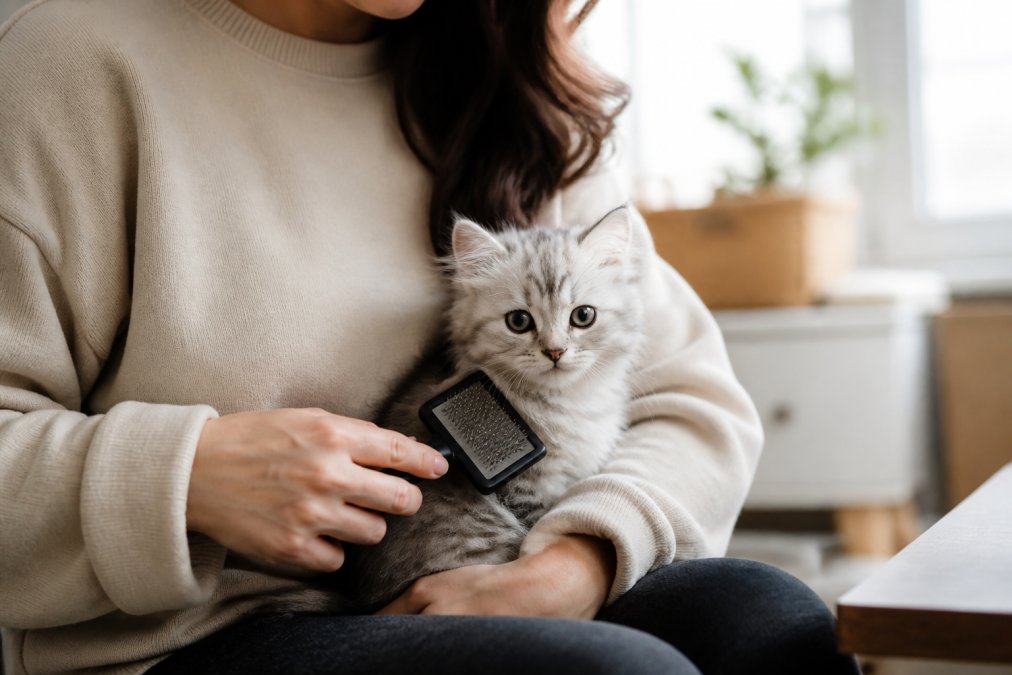
Most kittens aren't naturally afraid of brushes; they're afraid of the experience being forced or uncomfortable. Start with the gentlest tool: a rubber curry brush or grooming mitt. Let your kitten sniff it first.
Begin with very short sessions. Thirty seconds of gentle brushing is enough for the first time. Stop before your kitten gets frustrated. Use treats and praise during and after brushing to build positive association.
Desensitization Training Schedules
Desensitization works by gradually exposing your kitten to grooming in small, manageable doses.
Week 1-2: Introduce the tool without using it. Let your kitten play with it and investigate. Reward curiosity with treats.
Week 3-4: Touch your kitten gently with the brush while offering treats. Don't brush yet, just make contact.
Week 5-6: Begin gentle brushing for 10-15 seconds at a time. Focus on areas kittens typically enjoy, like cheeks and neck. Stop before frustration sets in.
Week 7+: Gradually extend sessions to 1-2 minutes. Introduce different tools one at a time using the same progression.
Watch your kitten's body language. Ears forward and relaxed posture mean comfort. Tail swishing, ears back, or attempts to escape mean stop and try again tomorrow.
Kitten Grooming Schedule: Age-Appropriate Milestones
Grooming needs change as kittens grow.
8-12 weeks: Introduce grooming gently with short, frequent sessions. Focus on brushing and getting kittens used to being handled. Nail trimming can start if nails are visibly sharp.
3-6 months: Kittens develop their adult coat texture around this time (vet.cornell.edu). Brushing becomes more important to prevent mats. Nail trimming becomes a regular need, typically every 2-3 weeks. Ear checks should happen weekly.
6+ months: Most kittens benefit from a consistent grooming routine. Long-haired kittens may need daily brushing. Short-haired kittens typically need 2-3 times per week. Nail trimming stays on a 2-3 week schedule.
The grooming routine you establish now becomes the baseline for adulthood.
Safety Precautions and Common Mistakes to Avoid
Grooming safety is about preventing injury, stress, and infection. Never groom an injured or sick kitten without veterinary guidance. Always check for parasites before grooming. Keep grooming sessions short, especially early on. A stressed kitten learns to fear grooming, and that fear can last years.
Kitten-Specific Safety Hazards
Kittens are smaller and more fragile than adult cats. Steam tools, while helpful, require careful positioning. Never direct steam at the face, eyes, ears, or nose. Test the temperature on your own wrist first.
Nail clippers can pinch skin if you're not careful. Position the clipper so you're only cutting the nail, not the surrounding paw pad. Many kittens dislike having their ears or face touched during grooming; respect those boundaries.
Water temperature matters significantly. Use lukewarm water, never hot (aspca.org). After bathing, dry thoroughly with a towel and keep your kitten in a warm space.
Emergency Grooming First Aid
If you cut the quick and it bleeds, apply styptic powder immediately. Press gently for 10-15 seconds. If it doesn't stop, apply pressure with a clean cloth for another minute.
If your kitten gets tangled in a brush or tool, stay calm and work the kitten free gently. If your kitten shows signs of pain during grooming, stop immediately and check for injury. If your kitten overheats during a bath (panting heavily, drooling), get them out of water immediately, wrap in a towel, move to a cool area, and contact your vet if symptoms don't resolve quickly.
Creating a Stress-Free Grooming Routine
Choose a quiet, comfortable space for grooming. A bathroom works well because it's easy to clean and has good lighting. Establish a routine time; many kittens do better with grooming at the same time each day or week. Grooming after playtime, when your kitten is tired, often works better than when they're energetic.
Keep all tools and supplies within reach before you start. Use positive reinforcement throughout. Treats, gentle praise, and stopping before frustration builds create a kitten that tolerates grooming. Over time, many kittens actually enjoy it because they associate it with attention and rewards.
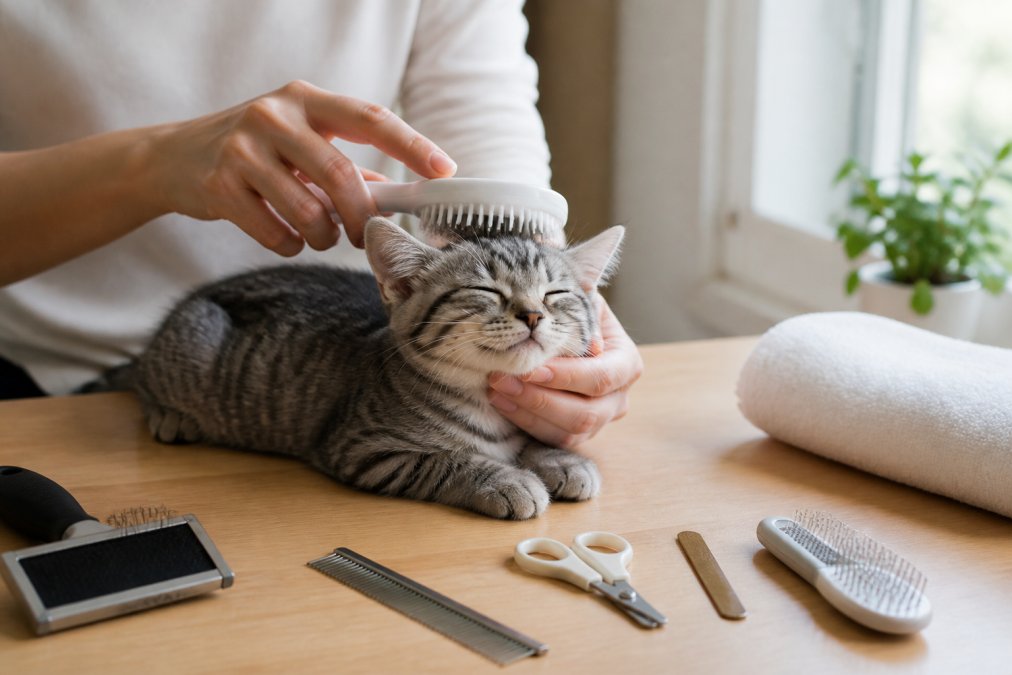
Grooming is also a bonding opportunity. It's one-on-one time where you're caring for your kitten's health. Kittens that grow up with this kind of attention develop stronger bonds with their owners.
Starting grooming early with the right safe grooming tools for kittens sets your pet up for a lifetime of good health and comfort. The Pet Grove's curated selection of grooming supplies, including the SteamFresh Cat Grooming Brush, Clinical Care Hypoallergenic Pet Shampoo, and Fresh Coat Pet Conditioner, makes building a stress-free routine easier. Each product is chosen with kitten safety and comfort in mind. Get started today with free shipping on your grooming essentials and give your kitten the foundation for healthy, happy care.

Frequently Asked Questions
What age can I start grooming my kitten with safe grooming tools?
You can begin gentle grooming with safe grooming tools for kittens as early as 4-6 weeks old, starting with short 2-3 minute sessions using soft brushes. Begin with brief, positive experiences to help your kitten become comfortable with handling. Nail trimming can start around 8-10 weeks when kittens are more cooperative. Always prioritize your kitten's comfort and never force grooming if they're stressed.
How do I introduce a kitten to a brush without causing stress?
Start by letting your kitten sniff and investigate the brush during playtime. Use treats and praise to create positive associations. Begin with very gentle strokes on the head and back for just 30 seconds, then stop while your kitten is still enjoying it. Gradually increase duration over several days. Always use soft-bristled brushes designed for sensitive kitten skin, and avoid sensitive areas like the belly and paws initially.
What are the best kitten nail clippers to use safely?
Look for guillotine-style or scissor-style nail clippers specifically designed for kittens, as they're easier to control than human nail clippers. Ensure clippers are sharp and properly sized for tiny kitten nails. Keep styptic powder on hand to stop bleeding if you accidentally cut the quick. For kittens under 8 weeks, consider using a nail file instead of clippers. Always trim only the clear or light-colored portion of the nail, never the pink quick.
How often should I follow a kitten grooming schedule?
A kitten grooming schedule typically includes brushing 2-3 times per week for short-haired kittens and daily for long-haired breeds. Nail trimming every 2-3 weeks is standard as kittens grow quickly. Ear checks should happen weekly, and dental care can begin around 4-6 weeks with soft-bristled toothbrushes. Adjust frequency based on your kitten's coat type, growth rate, and individual needs.
This article was written using GrandRanker


