

Cat Grooming Tools for Shedding Control: 2026 Guide
Table of Contents
- How to Choose the Right Cat Grooming Tools for Shedding Control
- Best Cat Grooming Tools for Short-Haired Cats
- Best Deshedding Brush for Long Haired Cats
- How to Use a Deshedding Tool Safely
- Cat Grooming Frequency for Shedding: How Often Is Enough
- Hairball Prevention, Dander, and Pet Hygiene Benefits
- Grooming Tool Ergonomics and Owner Comfort
- Conclusion
Last Updated: August 19, 2026
Choosing the wrong grooming tool costs cat owners in two ways: a stressed cat and a home covered in fur. At The Pet Grove, we offer a curated selection of premium pet supplies designed to enhance the comfort, health, and daily lives of dogs and cats. This guide covers every coat type, every tool category, and the grooming habits that actually reduce loose hair in your home.
Quick Picks:
- Best for short-haired cats: Self-cleaning slicker brush with stainless steel teeth
- Best for long-haired cats: Undercoat rake or deshedding brush with wider tooth spacing
- Best all-rounder: Steam brush with self-cleaning mechanism for cats who resist grooming
How to Choose the Right Cat Grooming Tools for Shedding Control
The right cat grooming tools depend entirely on your cat's coat type, coat density, and temperament. Buying the most expensive deshedding tool won't help if it's designed for a double-coated breed and your cat has a fine, single-layer coat.

Understanding Coat Type and Density
Cat coats fall into three broad categories: short, medium, and long. Within each, coat density varies significantly. A dense, plush coat like a British Shorthair's holds more loose hair near the skin than the sleek coat of a Siamese.
Single-coated cats have only a topcoat. Double-coated cats have a topcoat plus a soft undercoat that sheds heavily during shedding season. The undercoat is where most loose fur accumulates and is the source of most hairball problems. To identify which coat your cat has, run your fingers against the direction of fur growth. If you feel a second, softer layer beneath the outer coat, your cat is double-coated.
According to American Veterinary Medical Association guidance on pet care, regular grooming is one of the most straightforward ways to monitor your cat's skin and coat health, and early detection of skin issues is far easier on a regularly brushed cat.
Slicker Brushes vs. Deshedding Tools: What's the Difference
Slicker brushes use fine, tightly-packed wire bristles set at an angle. They excel at detangling, removing surface loose fur, and smoothing the topcoat. They work on almost all coat types and are generally gentler, making them ideal for cats new to grooming.
Deshedding tools use stainless steel teeth spaced to reach through the topcoat and pull loose fur from the undercoat. They remove significantly more fur per stroke than a slicker brush but require careful technique. Used too aggressively, they can irritate sensitive skin.

The practical rule: start with a slicker brush to detangle and surface-clean, then follow with a deshedding tool on double-coated cats during heavy shedding season.
| Tool Type | Best Coat | Key Benefit | Caution |
|---|---|---|---|
| Slicker brush | All coat types | Detangles, smooths topcoat | Avoid excess pressure on thin coats |
| Deshedding tool | Double-coated | Removes undercoat loose fur | Not for single-coated or sensitive skin |
| Undercoat rake | Long, dense coats | Breaks up mats and tangles | Use before deshedding, not after |
| Pin brush | Long, silky coats | Gentle daily maintenance | Less effective for heavy shedding |
| Steam brush | All coat types | Loosens dirt, soothes skin | Requires charging, slower session |
Best Cat Grooming Tools for Short-Haired Cats
Short-haired cats shed more than most owners expect. The fur is finer and lighter, which means it floats further and clings to fabric more stubbornly. Tools that work best here prioritize surface-level loose fur removal without over-penetrating a thin coat.
For short-haired cats, a self-cleaning slicker brush with stainless steel teeth is the workhorse tool. The Pet Grooming Brush from The Pet Grove at $16.38 features stainless steel teeth that reach through to the topcoat, a rubberized ergonomic handle, and a fur release button that clears collected hair with a single press. It works on both small and large cats and removes loose fur without scratching.
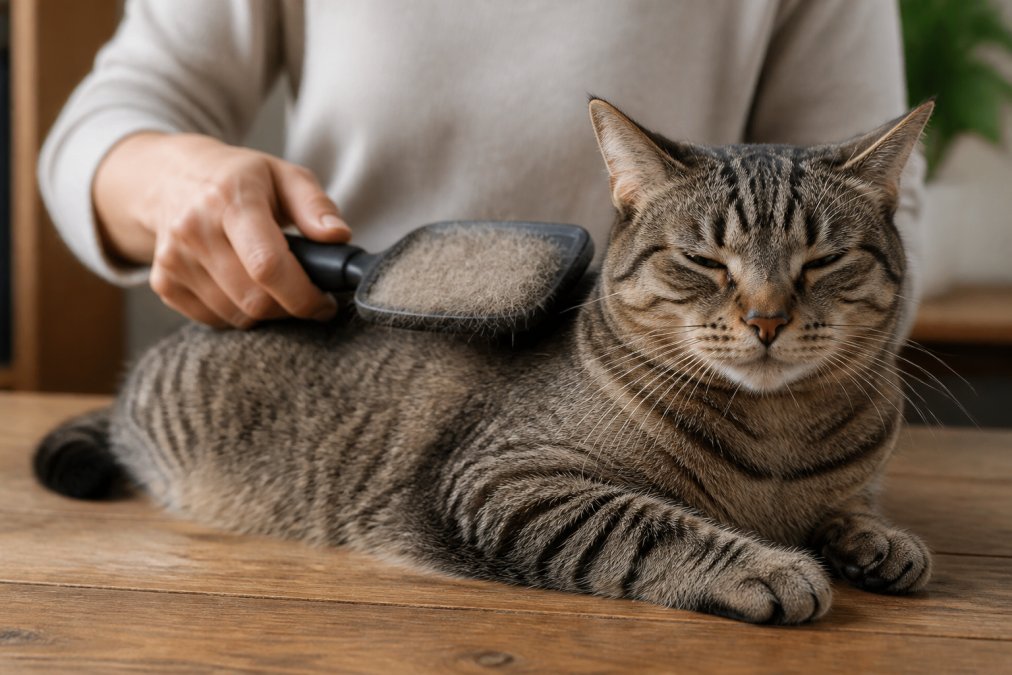
For short-haired cats, grooming frequency matters more than tool complexity. A quick two-minute session three times per week removes far more cumulative fur than a thorough monthly session.
Short-haired cats with sensitive skin benefit from a hypoallergenic shampoo used monthly. The Veterinary Formula Clinical Care Hypoallergenic Shampoo at $18.85 uses coconut-based cleansers, no dyes or fragrances, and is pH-balanced for cats. Bath time loosens dead skin and loose fur before brushing, reducing dander and improving coat health.

Best Deshedding Brush for Long Haired Cats
Long-haired cats present a different challenge: matting. Loose fur in a long coat doesn't fall away freely. It tangles with surrounding fur, forming mats that trap more fur, restrict airflow to the skin, and become painful if left unaddressed. The best deshedding brush for long haired cats must handle detangling before it tackles undercoat removal.
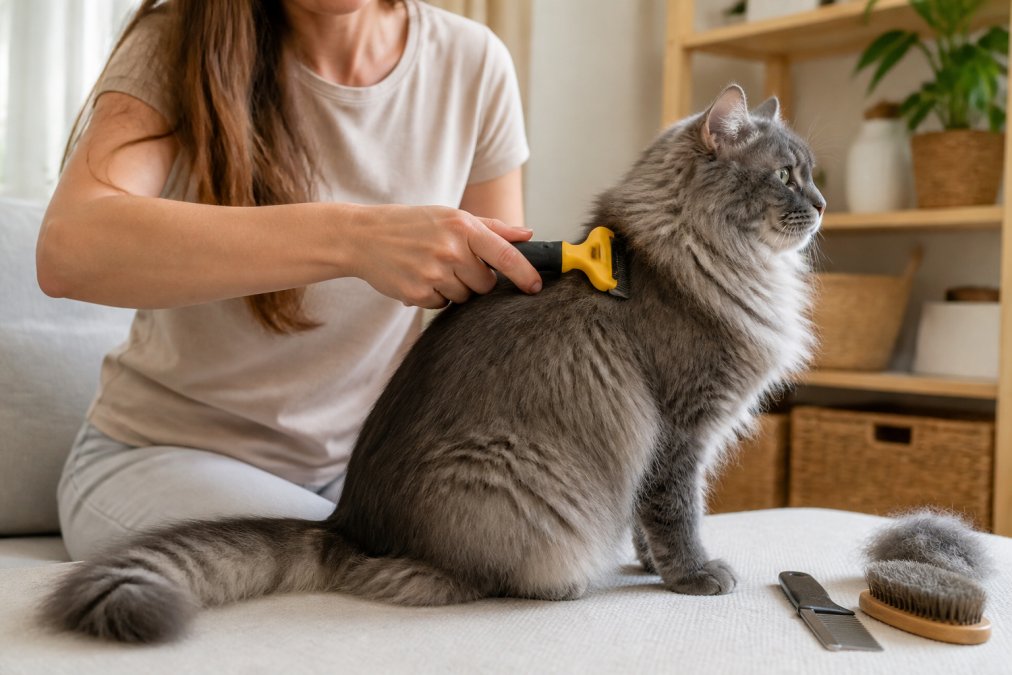
Start with a wide-tooth comb or undercoat rake to work through any tangles before applying a deshedding tool. Attempting to deshed a matted coat tears fur and distresses the cat.
For long-haired cats, the 3-in-1 Cat Steamy Brush from The Pet Grove at $12.59 offers a different approach. The hot steam technology loosens dirt and softens the coat before brushing, making detangling significantly easier on long, dense fur. The USB rechargeable design keeps it portable, and the self-cleaning mechanism removes collected fur quickly between strokes.
Pairing any deshedding brush with a quality conditioner makes a real difference. The Premium Fresh Pet Conditioner at $12.43 is specifically formulated for mat and tangle reduction, safe for kittens from six weeks old, and leaves a coat with enough slip that post-bath brushing becomes noticeably easier.
How to Use a Deshedding Tool Safely
Using a deshedding tool safely means understanding that more pressure does not mean more fur removed. The stainless steel teeth do the work. Your job is to guide the tool with consistent, light strokes.
Step-by-Step Deshedding Routine
Follow this sequence for a safe, effective deshedding session:
- Check the coat first. Run your fingers through the fur to identify any mats or tangles. Address these with a wide-tooth comb before introducing the deshedding tool.
- Start at the neck, work toward the tail. Follow the direction of fur growth with short, gentle strokes of 5-8 cm.
- Avoid bony areas. The spine, hip bones, and shoulder blades have very little tissue between skin and bone. Use extra-light pressure here or skip the deshedding tool entirely.
- Clear the tool frequently. Use the self-cleaning mechanism or manually remove collected fur every 3-4 strokes.
- Limit sessions to 10-15 minutes. Shorter, more frequent sessions produce better results than long infrequent ones.
- Finish with a slicker brush. This smooths the topcoat and picks up any loose fur the deshedding tool brought to the surface.
Grooming Anxiety and Desensitization
A cat that won't sit still for brushing isn't being difficult. It's responding to past experiences with discomfort, restraint, or unpredictability.
Desensitization works by building positive associations before any grooming happens. Place the brush near the cat's resting area for a few days without using it. Let the cat sniff and investigate on its own terms. Then, for the first few sessions, touch the cat with the brush without any brushing motion. Reward calm behaviour with a treat immediately. Progress to one or two strokes, then stop and reward. The goal in the first week is not to remove fur but to teach the cat that the brush predicts good things.
According to International Cat Care guidance on feline behaviour and handling, cats that experience grooming as predictable and low-pressure are significantly more cooperative over time than those subjected to restraint-based grooming.
Cat Grooming Frequency for Shedding: How Often Is Enough
Cat grooming frequency for shedding depends on coat type and the time of year. Short-haired cats generally need brushing two to three times per week. Long-haired and double-coated cats benefit from daily brushing, particularly during spring and autumn shedding seasons when undercoat turnover accelerates.
The mistake most cat owners make is grooming reactively, only brushing when they notice fur on furniture. By that point, loose hair has already been swallowed during self-grooming, contributing to hairball formation.
Age-Specific Grooming Needs
Kittens under six months have fine, soft coats that rarely mat and shed minimally. The priority is habituation. Short, gentle sessions with a soft slicker brush establish grooming as a normal, comfortable part of life.
Adult cats between one and seven years are in their peak shedding years. Coat density is at its highest, and seasonal shedding is most pronounced. This is when a consistent grooming routine has the greatest impact on home cleanliness and hairball prevention.
Senior cats over ten years often develop arthritis or skin sensitivity that makes grooming uncomfortable. They may also lose the flexibility to self-groom effectively, meaning matting and skin issues develop faster. Shorter, gentler sessions with softer bristle types are appropriate. If a senior cat shows reluctance to be touched in certain areas, consult a vet before continuing.
Hairball Prevention, Dander, and Pet Hygiene Benefits
Regular grooming with the right cat grooming tools does more than reduce fur on your sofa. Three specific health outcomes follow a consistent grooming routine: fewer hairballs, reduced dander, and better overall pet hygiene.
Hairball prevention is the most direct benefit. Cats spend a significant portion of their waking hours self-grooming, and every loose fur strand in the coat is a candidate for ingestion. Regular brushing removes this loose fur before the cat can swallow it. Long-haired and double-coated cats are at highest risk, and daily brushing during shedding season can substantially reduce hairball frequency.
Dander reduction matters for households with allergy sufferers. Dander is microscopic skin flakes attached to shed fur. Regular brushing removes loose fur carrying dander before it disperses into the air. As noted by Asthma and Allergy Foundation of America on pet allergens, consistent grooming is one of the most practical household steps for reducing airborne pet allergens.
Coat health and skin condition improve with regular brushing because the mechanical action distributes natural oils from the skin along the length of the fur. This produces a healthier sheen, reduces dry skin, and makes the coat more resistant to matting.
Grooming Tool Ergonomics and Owner Comfort
If the tool is uncomfortable to hold, you'll use it less. Grooming frequency drops, and all the benefits above disappear.
Ergonomic handle design matters more than most buyers realise. A rubberized, contoured grip reduces hand fatigue during longer sessions, particularly important for owners with arthritis or reduced grip strength. The weight and balance of the tool also affects control.
The self-cleaning mechanism is an ergonomic feature, not just a convenience. Stopping to manually pick fur off a brush every few strokes breaks the session's rhythm and extends the total grooming time. A single-button fur release keeps sessions smooth and efficient.
The compact size of the steam brush makes it genuinely manoeuvrable around a cat's body without awkward wrist angles that larger tools require. For owners who groom frequently, this reduces cumulative strain noticeably over time.
| Tool | Price | Best For | Key Feature |
|---|---|---|---|
| Self-Cleaning Pet Grooming Brush | $16.38 | Short-haired cats, all sizes | Stainless steel teeth, fur release button, ergonomic handle |
| 3-in-1 Cat Steamy Brush | $12.59 | Long-haired cats, anxious cats | Steam loosens coat, USB rechargeable, self-cleaning |
| Veterinary Formula Hypoallergenic Shampoo | $18.85 | Cats with sensitive skin or allergies | Coconut-based, pH-balanced, fragrance-free |
| Premium Fresh Pet Conditioner | $12.43 | Long-haired cats prone to matting | Mat and tangle reduction, safe from 6 weeks |
Managing shedding is an ongoing process, not a one-time fix. The cats that shed the least in your home are the ones whose owners brush consistently, use the right tool for the coat type, and treat grooming as a positive routine. If you're building or upgrading your grooming kit, The Pet Grove carries a curated selection of premium grooming tools with free shipping, including the self-cleaning brush and steam brush covered in this guide. Start with the right tool for your cat's coat, build a consistent routine, and the results show within the first two weeks.
Frequently Asked Questions
What is the best grooming tool for shedding cats?
The right cat grooming tool depends on coat type. Short-haired cats do well with a self-cleaning slicker brush or a rubber bristle tool that lifts loose hair without scratching sensitive skin. Long-haired cats benefit more from an undercoat rake or a deshedding brush with stainless steel teeth that reach through the topcoat to pull out trapped loose fur. For cats that resist brushing, a steam brush can help by softening the coat first, making the session more comfortable.
How often should I use a deshedding tool on my cat?
Cat grooming frequency for shedding depends on coat length and the time of year. Short-haired cats generally need brushing two to three times a week, while long-haired cats benefit from daily sessions, especially during peak shedding seasons in spring and autumn. Using a deshedding tool more than once a day on the same area can irritate the skin, so keep each session to five to ten minutes and watch for any redness or sensitivity.
What is the difference between a slicker brush and a deshedding tool?
A slicker brush has fine, closely spaced wire pins set in a flexible pad. It works mainly on the topcoat, smoothing tangles and removing surface loose hair. A deshedding tool has longer, stainless steel teeth designed to reach through the topcoat and pull out shed hair from the undercoat before it ends up on your furniture. For cats with a dense undercoat, a deshedding tool removes significantly more fur per session than a slicker brush alone.
How can I reduce my cat's shedding naturally?
Regular grooming is the most direct way to manage shedding, but coat health also plays a role. Bathing with a gentle, hypoallergenic shampoo removes dead skin cells and loosens trapped fur. Following with a detangling conditioner reduces matting and makes subsequent brushing easier. Keeping your cat well-hydrated supports coat texture from the inside. Grooming consistently year-round, rather than only during heavy shedding seasons, keeps loose hair levels manageable and reduces dander around the home.
Do cat deshedding tools work on cats with sensitive skin?
Yes, provided you choose a tool with rounded or coated teeth and use light pressure. Cats with sensitive skin or thin coats can find metal teeth uncomfortable if pressed too firmly. A steam brush is a good option here: the warm moisture softens the coat and loosens loose fur without the mechanical friction of traditional deshedding tools. Always check the skin after each session and stop if you notice redness, which usually signals too much pressure or too frequent use.
This article was written using GrandRanker


