

Why Switch to Premium Pet Supply Stores in 2026
Table of Contents
- Premium Pet Supply Stores vs Big-Box Retailers: What Actually Changes
- Ingredient Quality and Label Transparency: How to Read Pet Food Labels
- Best Limited Ingredient Dog Food Brands for Sensitive Stomachs
- The Importance of Pet Nutrition Consultation in a Curated Store
- The Real Cost of Cheap Pet Supplies: Long-Term Health vs Short-Term Savings
- Signs of a Quality Retailer: Safety Standards, Sourcing, and Support
- Your Next Steps: Making the Switch to a Premium Pet Supply Store
- Frequently Asked Questions
Last Updated: September 8, 2026
Premium Pet Supply Stores vs Big-Box Retailers: What Actually Changes
The decision to switch to premium pet supply stores is rarely about a single product. It is a shift in how you approach pet nutrition, sourcing, and long-term health outcomes. Pet owners often arrive frustrated after years of guessing, only to discover that the difference between a grocery aisle and a curated retailer is the difference between filling a bowl and feeding an animal.
Premium pet supply stores are retail operations that deliberately curate their inventory around ingredient quality, nutritional profile, and manufacturer transparency rather than shelf-space fees. A big-box store may stock 40 varieties of kibble; a premium store stocks fewer, better-documented options. That restraint means every bag on the shelf has passed a human review for digestibility, allergen-free formulation, and supply chain integrity.
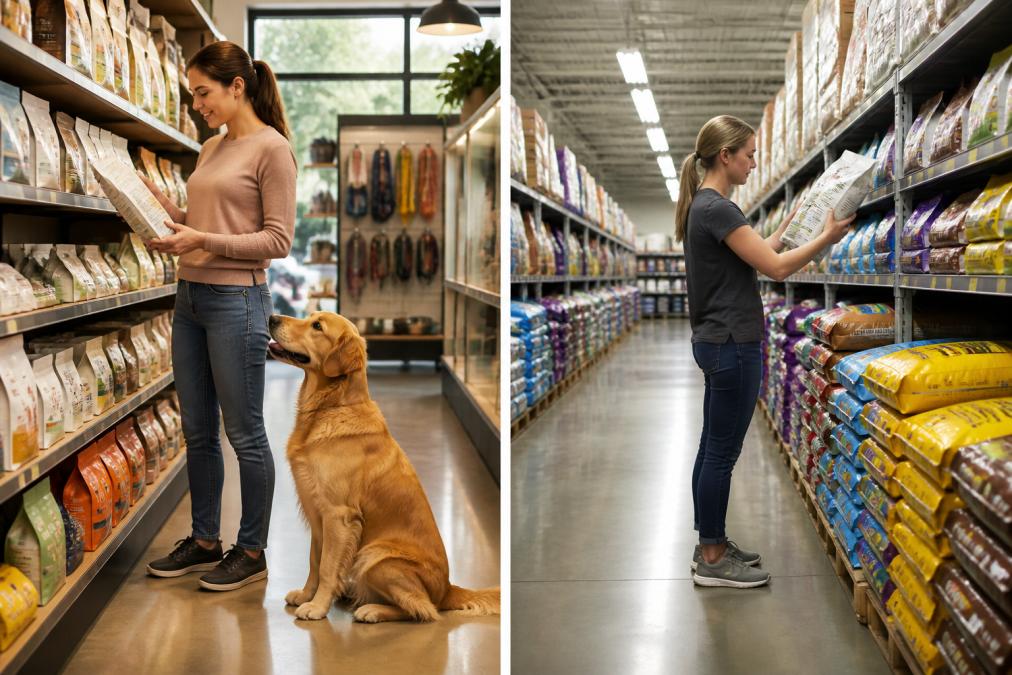
What changes most is your access to information. Staff at premium retailers can typically explain why one protein source outperforms another for a sensitive stomach, or why grain-free does not automatically mean low-carbohydrate. That retail expertise is a hidden value, hard to quantify until you need it.
Ingredient Quality and Label Transparency: How to Read Pet Food Labels
Pet food labels are marketing documents dressed as nutrition facts. The most reliable way to read them is to ignore the front of the bag and start with the ingredient panel and guaranteed analysis, which requires decoding several layers of regulatory language.
Step 1: Decode the Ingredient List
Ingredients are listed in descending order by weight before cooking. A kibble that lists "chicken" first may still contain more carbohydrates than protein once moisture is removed, because chicken is roughly 70% water (the FDA). A more accurate picture comes from looking at the first five ingredients and asking what remains after processing.
- Named animal proteins (e.g., "deboned chicken," "salmon," "bison") are specific and traceable. They indicate a locked-in supply chain.
- Unnamed "meat meal" or "poultry by-product meal" is a red flag. These terms allow manufacturers to source from multiple, inconsistent suppliers. The protein quality can vary batch to batch.
- Ingredient splitting is a common tactic. A manufacturer may list multiple grain fractions (e.g., "ground corn," "corn gluten meal," "flaked corn") so that corn appears lower on the list individually, even though it is the dominant ingredient collectively.
Step 2: Understand the Guaranteed Analysis
The guaranteed analysis only lists minimums and maximums for crude protein, crude fat, crude fiber, and moisture. It does not tell you about digestibility, amino acid profiles, or bioavailability. Two foods can both list "30% protein," but one may derive that protein from highly digestible chicken meal while the other uses less digestible plant proteins.
A more useful metric is the calorie distribution, often found on the manufacturer's website or by calling their customer service line. Many premium brands now publish this data openly. A general guideline for carnivores like cats is that protein should represent at least 40-50% of caloric intake; for dogs, 30-40% is common, though active or working dogs may need more (avma.org).
Step 3: Look for the AAFCO Statement, But Read It Carefully
The Association of American Feed Control Officials (AAFCO) statement is a baseline, not a seal of excellence. It tells you whether the food is formulated to meet a specific life stage or whether it has passed feeding trials, which are more rigorous than formulation-only substantiation. However, AAFCO does not regulate ingredient quality or sourcing, so a food can meet AAFCO standards and still use low-grade raw materials.
Step 4: Scrutinize Marketing Claims
Terms like "natural," "holistic," and "premium" have no legal definition in pet food (the FDA). "Grain-free" is regulated but does not mean low-carbohydrate; many grain-free formulas substitute peas, lentils, or potatoes, which can be high on the glycemic index. "Human-grade" is a stronger claim, but it only applies to individual ingredients, not the final product, unless the entire manufacturing process is certified.
A Practical Comparison: What the Labels Don't Say
Consider two hypothetical kibbles:
- Brand A (Grocery Store): First ingredients are "ground yellow corn, poultry by-product meal, corn gluten meal, animal fat preserved with BHA." The AAFCO statement says "formulated to meet AAFCO nutrient profiles." No calorie distribution is published.
- Brand B (Premium Retailer): First ingredients are "deboned chicken, chicken meal, brown rice, barley, chicken fat (preserved with mixed tocopherols)." The AAFCO statement says "animal feeding tests using AAFCO procedures substantiate that this food provides complete and balanced nutrition." Calorie distribution is available on the website.
The difference is not just in the first ingredient. It is in the specificity of the protein source, the preservatives used (mixed tocopherols are a natural vitamin E source; BHA is a synthetic antioxidant), and the willingness to publish more data. Premium retailers often walk you through these distinctions because they have already vetted the brands on their shelves.
Best Limited Ingredient Dog Food Brands for Sensitive Stomachs
For dogs with food sensitivities, the best limited ingredient dog food brands pair a single novel protein with a minimal carbohydrate source, reducing potential triggers while maintaining a complete nutritional profile.
A strong example is the Natural Balance Limited Ingredient Diet Sweet Potato & Bison Recipe, available at The Pet Grove. Bison serves as the sole animal protein, providing essential amino acids for muscle maintenance, while sweet potato offers grain-free fiber for digestive health. This formula is designed for sensitive pets, supporting healthy coat, skin, and digestion through a deliberately short ingredient list.

When evaluating limited ingredient options, confirm the food is formulated for your dog's life stage. A puppy with sensitivities has different calcium and phosphorus needs than a senior dog.
The Importance of Pet Nutrition Consultation in a Curated Store
Nutrition consultation is a service that can separate premium pet supply stores from warehouses. A consultation is a conversation where a knowledgeable staff member reviews your pet's age, activity level, health history, and current diet to recommend specific foods and supplements.
The importance of pet nutrition consultation becomes obvious when you consider the cost of guessing wrong. Switching a dog with allergies to the wrong "sensitive" formula can mean another week of scratching, another round of antibiotics, and another bag of wasted food. A consultation can help prevent that cycle by matching the pet's actual dietary requirements to the right product the first time.
Most owners do not realize that many health issues, from dull coats to chronic ear infections, can trace back to food. A good consultation can connect those dots. It also covers transition protocols, which most guides ignore: suddenly switching kibble can cause digestive upset, so a proper plan often spans 7 to 10 days, gradually mixing the new food with the old.
The Real Cost of Cheap Pet Supplies: Long-Term Health vs Short-Term Savings
The cost of cheap pet supplies is rarely visible at the register. It shows up later in veterinary bills, poor coat condition, and food waste when your pet refuses to eat a low-palatability formula.
Cheap kibble often compensates for lower-quality raw materials with heavy flavoring to encourage consumption. The pet eats it, but the nutrient density is low, meaning the animal needs more food to meet its needs. A 4-pound bag of Merrick Healthy Grains for small breeds costs $25.04 at The Pet Grove. A cheaper alternative may cost $15, but if your dog needs 30 percent more of it to feel full, the difference is marginal. Add in the potential for allergy visits or digestive issues, and the cheap option frequently becomes the expensive one.
For cats, the same logic applies. A high-protein, grain-free formula like Blue Buffalo Wilderness keeps cats satiated longer and supports lean muscle. The practical math often favors quality, especially since a healthier pet may need fewer vet visits for chronic conditions.
Signs of a Quality Retailer: Safety Standards, Sourcing, and Support
A quality premium pet supply store signals its standards through sourcing transparency, recall responsiveness, and after-sale support. You should be able to ask where a food is manufactured and get a specific answer, not a vague reference to a co-packer.
Look for retailers that stock brands with dedicated manufacturing facilities and published safety protocols. The pet food industry has faced recalls tied to contaminated raw materials, so supply chain integrity is not a theoretical concern. A curated store vets its brands for this reason, carrying specialized inventory from limited ingredient diets to puzzle feeders rather than stocking every product that exists.
Customer support matters equally. A quality retailer stands behind its products with clear return policies, especially for food that does not work for your pet. You should never feel pressured to finish a bag that triggers a reaction.
Your Next Steps: Making the Switch to a Premium Pet Supply Store
Switching to a premium pet supply store does not require replacing everything at once. Start with the highest-impact item: food. If your pet has known sensitivities, begin with a limited ingredient diet and run a full transition period of 7 to 10 days, monitoring stool quality, coat condition, and energy levels.
But the "switch" is rarely a single event. It is a process with distinct phases, and most guides stop at the food bowl. Here is a more complete protocol covering the nutritional, environmental, and behavioral dimensions of the transition.
Phase 1: The Food Transition (Days 1-10)
A sudden change in diet is the most common cause of digestive upset, vomiting, and refusal to eat. The standard protocol is a gradual mixing schedule:
| Day | New Food | Old Food | Notes |
|---|---|---|---|
| 1-2 | 25% | 75% | Monitor for loose stool or gas |
| 3-4 | 50% | 50% | Expect some soft stool; this is normal |
| 5-7 | 75% | 25% | Stool should begin firming up |
| 8-10 | 100% | 0% | If diarrhea persists, slow the schedule down |
If your pet has a particularly sensitive stomach, extend each phase by two days. Adding a probiotic supplement during this window can help populate the gut with beneficial bacteria.
Phase 2: The Environmental Audit (Week 2)
Food is not the only source of toxins or low-quality ingredients in your pet's routine. Once the diet is stable, audit the other items you buy regularly:
- Treats: Many treats contain more fillers than the main food. Look for single-ingredient treats (freeze-dried liver, sweet potato chews) that match the quality of your new kibble.
- Chews: Rawhide chews are often processed with bleach and artificial flavors. Consider digestible alternatives like bully sticks or yak milk chews.
- Food and water bowls: Plastic bowls can harbor bacteria in micro-scratches and may leach chemicals. Stainless steel or ceramic bowls are safer and easier to sanitize.
- Supplements: If your pet is on a joint or skin supplement, verify that the brand follows third-party testing protocols similar to what you now expect from food.
Phase 3: The Behavioral Adjustment (Weeks 3-4)
A higher-quality diet often changes eating behavior. Some pets eat more slowly because the food is more satiating; others may gulp food down. If overeating or rapid consumption is an issue, environmental enrichment tools are not a luxury, they are a health intervention.
- Puzzle feeders slow down fast eaters and provide mental stimulation. A dog that finishes a meal in 30 seconds is a dog at risk for bloat or vomiting.
- Slow feeder bowls with internal ridges force the pet to work around obstacles to access food.
- Automatic dispensers are useful for portion control, especially for pets that need multiple small meals per day. The SmartFeed Wi-Fi Automatic Pet Feeder at The Pet Grove supports consistent portion control through an app-controlled schedule, which helps pets with weight management and digestive regularity.
Phase 4: The Cost Recalculation (End of Month 1)
After 30 days on the new regimen, recalculate your actual costs. Track three numbers:

- Cost per feeding day: Divide the bag price by the number of days it lasts. Premium food is often more calorie-dense, so the bag may last longer than you expect.
- Vet visit frequency: Note any reduction in allergy flare-ups, ear infections, or digestive issues that previously required a vet visit.
- Food waste: Premium food is typically more palatable, which means less food thrown away because your pet refused to eat it.
| Metric | Before Switch | After 30 Days |
|---|---|---|
| Cost per feeding day | $1.50 | $1.80 |
| Vet visits (chronic issues) | 1 per month | 0 |
| Food wasted per month | 20% | 5% |
In this example, the premium food costs 20% more per day, but eliminating one vet visit saves $50-$80. The switch pays for itself in the first month.
The Final Step: Build a Relationship with Your Retailer
The switch is not about buying the most expensive items on the shelf. It is about buying from a source that has already done the research, verified the sourcing, and will support you when a product does not work. That confidence is the real value of premium pet supply stores.
A quality retailer may remember your pet's history, flag new products that might be relevant, and offer guidance when your pet's needs change with age or health status. That ongoing relationship can be the difference between a transaction and a partnership.
Frequently Asked Questions
Is premium pet food really better for my pet's health?
Premium pet food typically uses higher-quality ingredients with better digestibility and nutrient density. This means your pet absorbs more nutrition from each serving, which supports long-term health, healthier skin and coat, and better digestion. Look for brands that name a specific animal protein as the first ingredient and avoid vague by-products. The best limited ingredient dog food brands often feature a single protein source, which helps identify and manage food sensitivities.
How do premium pet supply stores differ from big-box retailers?
Premium stores like The Pet Grove curate their inventory, which means every product on the shelf has been vetted for quality and safety standards. Big-box retailers stock thousands of items based on volume sales, not nutritional value. A curated store also offers staff who can answer questions about pet nutrition, transition protocols, and life-stage needs.
Does higher-quality pet food actually lead to long-term savings?
Yes. Although the upfront cost is higher, premium food often has a higher nutrient density, so you feed less per meal. More importantly, better nutrition supports preventative care, which can reduce vet visits for allergies, digestive issues, and obesity-related conditions. The Pet Grove's Natural Balance Limited Ingredient Diet, at $34.92 for a 4-pound bag, offers a single animal protein source that can help prevent costly reactions.
What are red flags to look for in a pet supply store?
Red flags include vague ingredient lists, artificial preservatives like BHA or BHT, and staff who cannot answer basic questions about pet nutrition. Be cautious of stores that push generic brands without explaining the sourcing or manufacturing standards. A quality retailer will openly discuss label transparency, show you the supply chain, and offer a return policy if the food does not work for your pet.
Making the switch to premium pet supply stores is a decision to prioritize your pet's long-term health over short-term convenience. The challenge is finding a retailer you can trust to carry the right food and stand behind it. The Pet Grove offers a curated selection of grain-free and limited ingredient foods, mentally stimulating feeders, and free shipping on premium essentials. Get started with The Pet Grove and give your pet the nutritional foundation it deserves.


