

Best Dog Food for Sensitive Stomachs: 2026 Guide
Table of Contents
- Why Your Dog's Stomach Is So Sensitive
- Symptoms of Sensitive Stomach in Dogs
- Best Dog Food for Sensitive Stomachs: Top Picks
- Limited Ingredient Diet for Dogs: Who It Helps
- How to Transition Dog Food Safely
- The Stress-Gut Connection Most Owners Miss
- Budget vs. Premium: What You Actually Pay For
- Frequently Asked Questions
Last Updated: September 12, 2026
Why Your Dog's Stomach Is So Sensitive
A dog's sensitive stomach usually traces back to one of three things: a food intolerance, a sudden diet change, or stress. Unlike a true allergy, which triggers an immune response, most digestive upset in dogs comes from the gut struggling to break down specific ingredients. This guide from The Pet Grove walks through what actually helps.
The canine digestive tract is short compared to ours. Food moves through quickly, which means poorly tolerated ingredients have less time to be broken down before they cause problems. Common triggers include sudden protein switches, high-fat table scraps, and artificial preservatives.
Some dogs are simply born with a more reactive gut. Others develop sensitivity over time after months on the same kibble. A common mistake is assuming every bout of vomiting means a permanent food allergy. Often it's a temporary gastrointestinal upset that resolves once you remove the trigger.
Symptoms of Sensitive Stomach in Dogs
The most common symptoms of sensitive stomach in dogs are vomiting, diarrhea, flatulence, and lethargy after eating. Owners also report frequent stomach gurgling, loose stool quality, and occasional food refusal.
Watch for these signs:
- Intermittent diarrhea or soft stool that never fully firms up
- Vomiting within an hour of eating
- Excessive gas or audible stomach noise
- Reduced appetite or picky eating
- Dull coat or flaky skin, which can signal poor nutrient absorption
When It's More Than Just an Upset Stomach
Occasional soft stool after a new treat is normal. Persistent symptoms lasting more than 48 hours, blood in the stool, or repeated vomiting need a veterinary consultation. These can point to something beyond simple food intolerance, including parasites or an underlying condition.
Best Dog Food for Sensitive Stomachs: Top Picks
There is no single best dog food for sensitive stomachs, the right pick depends on whether your dog's issue is an intolerance, an allergy, or a stress-driven gut reaction. What separates a good sensitive-stomach formula from a marketing claim comes down to a short list of criteria most veterinarians and veterinary nutritionists look for.
What to Look For Before You Buy
- A single, named animal protein. "Chicken meal" or "bison" tells you the source. "Meat meal" or "poultry byproduct" does not.
- A novel or hydrolyzed protein if a food allergy is suspected. Novel means your dog has never eaten it (venison, bison, rabbit, duck). Hydrolyzed means the protein is broken into fragments too small for the immune system to recognize.
- A short ingredient panel. Fewer ingredients means fewer variables to isolate during a trial.
- A named carbohydrate source, sweet potato, oatmeal, brown rice, or barley, rather than a generic "grain" or "cereal."
- No artificial colors, flavors, or preservatives (BHA, BHT, ethoxyquin). These are common non-protein triggers.
- Adequate fiber. Moderate fermentable fiber (beet pulp, pumpkin, psyllium) supports stool quality; too much can worsen gas.
- An AAFCO nutritional adequacy statement on the label confirming the diet meets the life-stage profile.
Wet vs. Dry for Sensitive Stomachs
Wet food is often easier on a reactive gut because it is more digestible, has higher moisture content (which helps firm up stool), and typically contains fewer binders and preservatives than kibble. Dry food is more economical and convenient, and many limited-ingredient kibbles now match wet food on protein quality. A common approach is to feed a limited-ingredient kibble as the base and use a single-protein wet topper for palatability during a transition.

Two Options Worth Considering
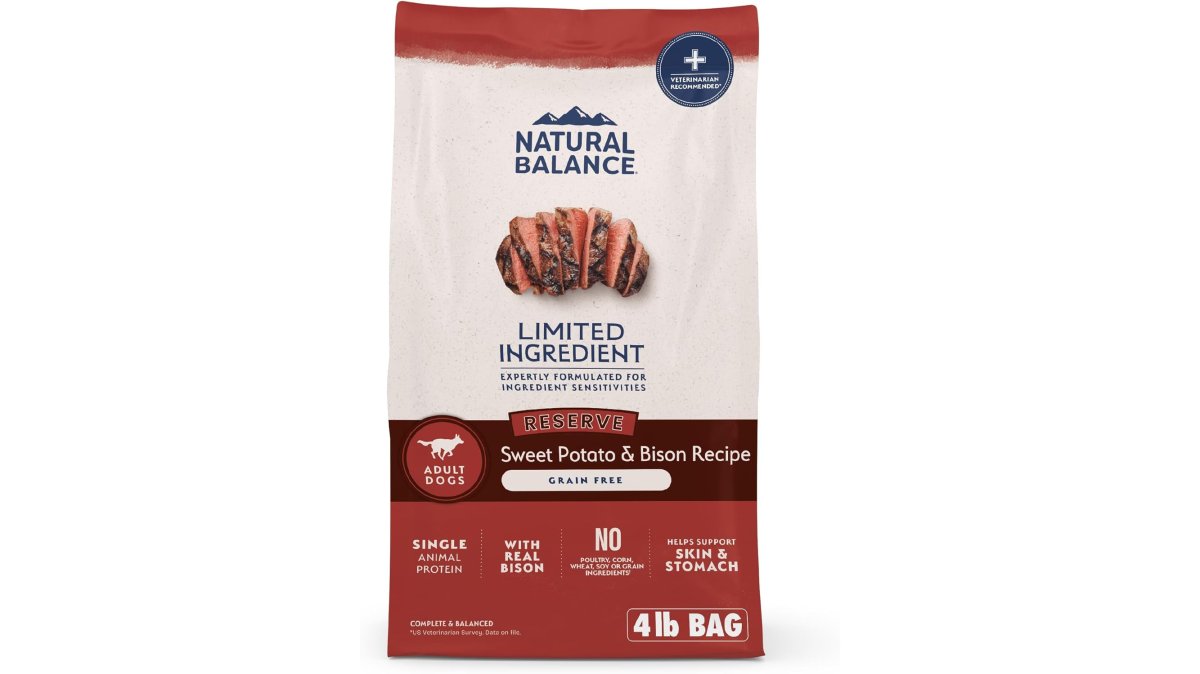
Natural Balance LID Sweet Potato & Bison
Bison serves as the sole animal protein here, which makes this a strong pick for dogs who react to chicken or beef. Sweet potato provides grain-free fiber to support digestive health. The recipe is built around a short ingredient list, so there's less to trigger a reaction. At $34.92 for a 4-pound bag, it's a solid starting point for an elimination-style trial.
Best for: Dogs with suspected protein intolerances who need a novel protein source.
Merrick Healthy Grains for Small Breeds
Small breeds have different needs, and this formula addresses them directly. Real deboned chicken leads the recipe, paired with ancient grains for steady energy. The kibble size suits smaller mouths, which matters if your dog bolts food and swallows air. It runs $25.04 for a 4-pound bag.
Best for: Small breed adults who tolerate chicken but need gentler grain sources.
| Food | Protein Source | Grain | Bag Size | Price |
|---|---|---|---|---|
| Natural Balance LID | Bison | Grain-free | 4 lb | $34.92 |
| Merrick Healthy Grains | Chicken | Ancient grains | 4 lb | $25.04 |
When a Prescription Diet Is the Right Call
If your dog has had repeated flare-ups on multiple over-the-counter limited-ingredient diets, a veterinary-prescribed hydrolyzed or novel-protein diet is often the next step. These formulas are held to stricter manufacturing controls to prevent cross-contamination with common allergens, something standard kibble lines cannot guarantee. Ask your vet before assuming a boutique limited-ingredient bag will do the same job.
Breed Predispositions Worth Knowing
Some breeds are genetically more prone to chronic gastrointestinal issues. German Shepherds and other large breeds frequently present with exocrine pancreatic insufficiency and food-responsive enteropathy (PubMed). French Bulldogs, Boston Terriers, and Boxers are overrepresented in cases of inflammatory bowel disease and flatulence. If your dog is one of these breeds, start with a limited-ingredient or hydrolyzed diet rather than cycling through boutique kibbles.
Limited Ingredient Diet for Dogs: Who It Helps
A limited ingredient diet for dogs helps pets with confirmed food intolerances by reducing the number of potential triggers in each meal. Fewer ingredients means fewer variables to isolate when something goes wrong.
These diets work best for dogs with a known or suspected food intolerance. They're less useful for dogs whose issues stem from stress or a medical condition. If you've tried several limited ingredient foods without success, the problem may not be the food at all.
How to Transition Dog Food Safely
Transitioning dog food safely means switching gradually over seven to ten days, mixing increasing amounts of the new food with the old. A sudden switch is one of the most common causes of digestive upset, even when the new food is better quality.
A 7-Day Transition Schedule
- Days 1-2: 25% new food, 75% old food
- Days 3-4: 50% new food, 50% old food
- Days 5-6: 75% new food, 25% old food
- Day 7: 100% new food
If stool quality worsens at any stage, hold at that ratio for an extra two days before continuing. For dogs with a history of severe sensitivity, stretch the schedule to ten days.
The Stress-Gut Connection Most Owners Miss
Stress directly affects a dog's gastrointestinal health. Cortisol disrupts the gut lining and changes how food is digested, which is why many dogs get diarrhea during thunderstorms, boarding, or after a household change (PubMed). Most food guides ignore this entirely.
If your dog's symptoms appear only during stressful events, a new food alone won't fix it. Address the stress first: keep routines consistent, use puzzle feeders to slow eating and provide mental stimulation, and give your dog a quiet space during upheaval.
How Stress Rewires the Gut
The gut and brain are connected by the vagus nerve and share signaling through the microbiome. When a dog is chronically stressed, three things happen:
- Gut motility speeds up or stalls. Either produces loose stool or constipation.
- The intestinal lining becomes more permeable, often called "leaky gut", allowing undigested proteins and bacteria into the bloodstream.
- The microbiome shifts toward less diverse bacterial populations, which reduces the gut's ability to ferment fiber and produce short-chain fatty acids that feed intestinal cells.
This is why a dog can eat the same food for years and suddenly develop sensitivity after a move, a new baby, or the loss of a companion animal.
Fiber and Probiotics: The Missing Piece
Most sensitive-stomach guides focus on what to remove from the bowl. Just as important is what to add.
Fiber comes in two forms and they do different jobs:
- Soluble/fermentable fiber (pumpkin, psyllium, beet pulp, chicory root) feeds gut bacteria and produces short-chain fatty acids that nourish the intestinal lining. It firms loose stool and supports the microbiome.
- Insoluble fiber (cellulose, rice bran) adds bulk and speeds transit. Useful for constipation, less helpful for diarrhea.
For a dog with a sensitive stomach, moderate soluble fiber is usually the better starting point. Canned plain pumpkin (not pie filling) is a common home addition, roughly one to two tablespoons per meal for a medium dog, adjusted to stool quality.
Probiotics introduce live beneficial bacteria. Strains commonly studied in dogs include Enterococcus faecium, Bifidobacterium animalis, and Lactobacillus acidophilus (PubMed). Not all dog probiotics are equal, look for a guaranteed analysis of CFU (colony-forming units) and a strain list, not just the word "probiotic" on the label. A common pattern is to use a probiotic during and after any antibiotic course, since antibiotics wipe out both harmful and beneficial bacteria.
Prebiotics (which feed the probiotics already in the gut) are often already present in quality kibble as chicory root or inulin. You do not need to supplement both unless your vet recommends it.
A Practical Stress-and-Gut Protocol
For dogs whose symptoms flare around predictable stressors:
- Two weeks before a known stressor (boarding, travel, a move), hold the current diet steady. Do not introduce new foods.
- Add a dog-specific probiotic daily starting one week before the event and continuing two weeks after.
- Keep a single-protein treat on hand so rewards don't introduce a new trigger.
- Maintain exercise and feeding times as closely as possible, even in a new environment.
- Log stool quality daily on a simple 1-7 scale (1 = liquid, 7 = hard) so you can see whether the intervention is working.
If symptoms flare only during stress, treat the stress and support the gut with fiber and probiotics. If they're constant regardless of environment, the food is the likely culprit, and an elimination diet is the next step.
Budget vs. Premium: What You Actually Pay For
Premium dog food costs more because of ingredient quality, protein sourcing, and testing. Budget kibble often uses lower-grade proteins and fillers that trigger sensitivities in reactive dogs. For a sensitive stomach, paying more usually means fewer vet visits.
That said, price alone doesn't guarantee a better outcome. A $25 bag with the right single protein can beat a $60 bag loaded with multiple proteins your dog can't tolerate. Read the ingredient list, not the price tag.
| Factor | Budget Kibble | Premium Limited Ingredient |
|---|---|---|
| Protein sourcing | Often unnamed byproducts | Named single proteins |
| Additives | Common | Minimal |
| Best for | Dogs with no sensitivities | Dogs with known intolerances |
The Pet Grove stocks grain-free and limited ingredient options with free shipping, so you can try a smaller bag before committing to a larger one.
Frequently Asked Questions
What food do vets recommend for dogs with sensitive stomachs?
Vets typically recommend limited ingredient diets or hydrolyzed protein formulas with a single animal protein source and easily digestible carbohydrates like sweet potato. Look for recipes that are vet-approved and free from common allergens such as chicken, beef, and wheat. Natural Balance LID Sweet Potato & Bison is a strong option because bison serves as the sole animal protein, reducing the chance of triggering a food intolerance while still providing complete nutritional balance.
How can I tell if my dog needs a sensitive stomach formula?
Watch for recurring vomiting, diarrhea, flatulence, or lethargy after meals. If these symptoms of sensitive stomach in dogs appear more than twice a month without an obvious cause, a sensitive stomach formula may help. Other signs include poor stool quality, dull coat, and excessive gas. A veterinary consultation can rule out underlying conditions before you switch foods, and many vets suggest an elimination diet to pinpoint the trigger.
What meat is best for a dog with a sensitive stomach?
Novel proteins like bison, venison, lamb, and whitefish are often the best choices because they are less likely to trigger an immune response than chicken or beef. Easily digestible proteins paired with limited ingredient diet for dogs formulas give the digestive tract a break. If your dog has never eaten bison before, it becomes a true novel protein, making it easier to identify whether a reaction occurs.
How long does it take to transition my dog to a new food?
A gradual transition over 7 to 10 days works best. Start with 25% new food mixed with 75% old food for three days, then move to 50/50 for three days, then 75% new for three days, and finally 100% new. This slow approach lets the digestive tract adjust and reduces the risk of gastrointestinal upset. If diarrhea or vomiting returns during the transition period, slow down and extend each stage.
Finding the right food for a sensitive stomach takes patience, and the wrong pick can set your dog back weeks. The Pet Grove carries carefully selected limited ingredient and grain-free formulas, including the Natural Balance LID and Merrick options above, backed by free shipping and a curated range built for pets with specific needs. Get started with The Pet Grove and give your dog meals that support real digestive comfort.


