

Limited Ingredient Diet for Dogs: A 2026 Guide
Table of Contents
- What Is a Limited Ingredient Diet for Dogs?
- Signs of Food Allergies in Dogs
- How to Perform a Dog Food Elimination Diet
- Key Ingredients to Look for and Avoid
- Transitioning Your Dog to New Food
- Benefits of Limited Ingredient Dog Food
- Nutritional Deficiency Risks and Cost Considerations
- Recommended Limited Ingredient Options
- Frequently Asked Questions
Last Updated: September 2, 2026
What Is a Limited Ingredient Diet for Dogs?
A limited ingredient diet for dogs is a feeding approach that minimizes the number of protein and carbohydrate sources to identify and manage food sensitivities. Rather than including multiple animal proteins, grains, and additives, these diets focus on single-protein sources paired with simple carbohydrates like sweet potatoes or peas.
The core principle is straightforward: fewer ingredients mean fewer potential dietary triggers. When your dog experiences chronic itching, digestive upset, or other signs of adverse food reactions, a limited ingredient approach helps pinpoint the culprit. At The Pet Grove, our curated selection includes premium limited ingredient options designed specifically for dogs with sensitivities. The Natural Balance Limited Ingredient Diet Sweet Potato & Bison Recipe, for example, features bison as the sole animal protein source paired with sweet potatoes as a grain-free carbohydrate base.

Limited ingredient diets differ fundamentally from regular commercial dog foods, which combine multiple proteins, grains, and by-products to reduce costs. Limited ingredient formulations prioritize ingredient quality and simplicity, making them ideal for dogs with documented or suspected food sensitivities.
Signs of Food Allergies in Dogs
The most common indicators of food sensitivities include persistent itching, excessive scratching, and hot spots on the skin. Dogs often develop red, inflamed patches on the face, ears, paws, and undercarriage, with obsessive paw licking or face rubbing on furniture signaling skin irritation tied to food reactions.
Gastrointestinal distress is another primary signal. Chronic diarrhea, vomiting, loose stools, bloating, or visible discomfort after eating may indicate food intolerance. Ear infections and yeast overgrowth frequently appear in dogs with food sensitivities, along with head shaking or a distinctive yeasty odor. Behavioral changes like lethargy, anxiety, or unusual aggression can also indicate nutritional imbalance or chronic inflammation.

True food allergies develop over time; symptoms emerge gradually over weeks or months and persist despite environmental changes (aaha.org). Acute reactions (vomiting within hours of eating) suggest a different issue entirely.
How to Perform a Dog Food Elimination Diet
An elimination diet is the gold standard for identifying food sensitivities in dogs. This structured protocol removes suspected dietary triggers, then reintroduces them one at a time to pinpoint the exact culprit.
Phase 1: Select Your Starting Diet (Weeks 1-2)
Begin with a limited ingredient diet containing a novel protein your dog has never eaten before. Novel proteins like bison, venison, duck, or rabbit are less likely to trigger reactions. Pair the novel protein with a single carbohydrate source like sweet potato or pea. Avoid treats, table scraps, or flavored medications during this phase.
Phase 2: Strict Elimination (Weeks 3-8)
Feed only your chosen limited ingredient diet for a minimum of 6-8 weeks (aafco.org). This timeframe allows your dog's digestive system to heal and inflammatory responses to resolve. Consistency is critical, every treat, chew, and food item must align with your elimination diet. Even a single exposure to a problematic ingredient can restart the inflammatory cycle.
Phase 3: Controlled Reintroduction (Weeks 9+)
Once symptoms resolve, reintroduce suspected allergens one at a time, waiting 2-3 weeks between additions. If itching or digestive upset reappears, you've identified a trigger. Remove that ingredient and continue with your successful base diet. This methodical approach typically takes 3-4 months total but provides definitive answers.
Key Ingredients to Look for and Avoid
Understanding ingredient labels separates effective limited ingredient diets from marketing gimmicks.
Ingredients to Prioritize
Single-protein sources like bison, duck, venison, or rabbit provide complete amino acid profiles without triggering sensitivities common to chicken or beef. Sweet potatoes and peas serve as grain-free carbohydrate sources that provide fiber and support digestive health. Look for "meat" or "meat meal" as the first ingredient, not "meat by-products" or "animal by-products." The ingredient list should be short and readable.
Supplements like fish oil support skin and coat health, while probiotics aid digestive function.
Ingredients to Avoid
Common food allergens include chicken, beef, wheat, corn, soy, and dairy. Artificial colors, flavors, and preservatives serve no nutritional purpose and increase the risk of adverse reactions. BHA, BHT, and ethoxyquin are chemical preservatives linked to inflammation; natural alternatives like mixed tocopherols (vitamin E) are safer choices.
Corn, wheat, and soy are inexpensive fillers that frequently trigger digestive upset. By-products and "animal fat" offer no transparency about ingredient quality.
Transitioning Your Dog to New Food
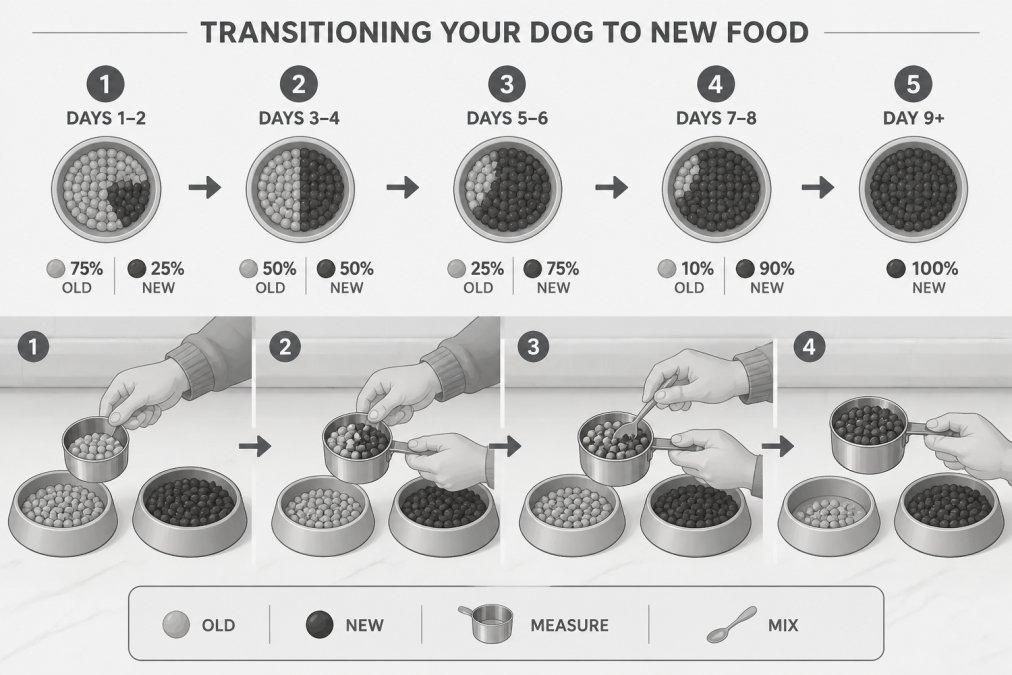
Switching to a limited ingredient diet requires a gradual transition to prevent digestive upset.
The Standard Transition Timeline (7-10 Days)
Days 1-2: Mix 25% new food with 75% old food.
Days 3-4: Increase to 50% new food, 50% old food.
Days 5-6: Move to 75% new food, 25% old food.
Days 7-10: Transition fully to the new limited ingredient diet.
Monitoring During Transition
Track your dog's stool quality, energy levels, and appetite throughout the switch. Firm stools indicate good digestibility; loose stools suggest the transition is moving too quickly. If your dog refuses the new food or shows severe digestive upset, slow the transition further. Warming the new food slightly or adding a small amount of low-sodium broth can improve palatability.
Once your dog fully transitions, maintain consistency. Avoid switching between brands or formulations frequently, as this reintroduces variables that complicate symptom management.
Benefits of Limited Ingredient Dog Food
Dogs on properly formulated limited ingredient diets often experience dramatic improvements in health and comfort.
Reduced Skin and Coat Issues
When food sensitivities resolve, chronic itching decreases substantially. Dogs stop obsessively scratching, hot spots heal, and coat quality improves visibly within weeks.
Improved Digestive Health
Elimination of problematic ingredients leads to more consistent, firm stools and reduced gas or bloating. Dogs digest whole food ingredients more efficiently, meaning better nutrient absorption and less gastrointestinal distress.
Clearer Ears and Fewer Infections
Ear problems tied to food sensitivities often resolve when triggers are removed, reducing the need for medications and veterinary visits.
Behavioral Improvements
Chronic discomfort from food sensitivities can manifest as anxiety or lethargy. As inflammation decreases and nutrient absorption improves, many dogs show enhanced mood and increased playfulness.
Nutritional Deficiency Risks and Cost Considerations
While limited ingredient diets address food sensitivities effectively, they introduce specific nutritional considerations.
Potential Deficiency Risks
Restricting ingredients can inadvertently limit certain nutrients if the diet isn't formulated with complete and balanced nutrition in mind. Look for formulations that explicitly state AAFCO (Association of American Feed Control Officials) compliance (aafco.org). If you're preparing homemade limited ingredient meals, work with a veterinary nutritionist to ensure supplementation addresses gaps.
Cost-Benefit Analysis
Premium limited ingredient diets cost 30-50% more per pound than standard commercial foods. However, chronic food sensitivities trigger frequent veterinary visits, medications for skin infections, and emergency care. Many pet parents find that investing in appropriate nutrition reduces overall healthcare expenses substantially.
The Pet Grove's Natural Balance Limited Ingredient Diet Sweet Potato & Bison Recipe ($34.92 for a 4-pound bag) represents a reasonable investment compared to repeated dermatology visits and antibiotics for secondary infections.
Age-Specific Considerations
Puppies on limited ingredient diets require careful attention to growth-supporting nutrients. Adult dogs tolerate restricted formulations well if nutritionally complete. Senior dogs may benefit from limited ingredient diets that also support joint health and cognitive function.
Recommended Limited Ingredient Options
Natural Balance Limited Ingredient Diet Sweet Potato & Bison Recipe
This grain-free formulation features bison as the sole animal protein source, paired with sweet potatoes as the primary carbohydrate. Bison provides complete amino acid profiles and is rarely encountered in standard dog foods, making it ideal for elimination diets. At $34.92 for a 4-pound bag, this option works well for dogs with chicken or beef sensitivities.
Complementary Treat Options
Treats matter during dietary management. Pet 'n Shape Duck Breast Jerky ($22.23 for 16 ounces) provides single-protein reward options without wheat, corn, or soy. For dogs needing calming support during dietary transitions, Healthybud Calming Aid Duck ($34.94 for a 2-pack) combines duck protein with functional ingredients like hemp and ashwagandha.

Selecting Based on Your Dog's Profile
Consider your dog's specific sensitivities, age, and activity level when choosing. The Pet Grove's curation process prioritizes ingredient transparency and nutritional completeness, removing the guesswork from finding appropriate limited ingredient options.
Managing food sensitivities in dogs requires patience, veterinary guidance, and the right nutritional foundation. A properly selected limited ingredient diet addresses the root cause rather than masking symptoms with medications. The Pet Grove's curated selection of premium limited ingredient options removes the uncertainty from dietary management, ensuring you're providing your dog with transparent, nutritionally complete food designed for sensitive systems. Start with veterinary consultation, implement a structured elimination diet if needed, and trust that the right nutrition transforms your dog's health and comfort.
Frequently Asked Questions
Q: What does 'limited ingredient diet' mean in dog food?
A: A limited ingredient diet contains fewer components than standard dog foods, typically featuring a single animal protein source, one carbohydrate source, and minimal additives. This approach reduces dietary triggers and makes it easier to identify which ingredients cause adverse food reactions. Dogs with food sensitivities or food intolerances benefit most from this minimalist nutrition approach, as fewer ingredients mean fewer potential irritants affecting digestive health and skin condition.
Q: How do I know if my dog has a food allergy?
A: Common signs include itchy skin, hot spots, chronic ear infections, gastrointestinal distress like vomiting or diarrhea, and excessive licking or scratching. Some dogs develop these symptoms weeks after eating a trigger ingredient. The most reliable way to identify the culprit is through an elimination diet, where you feed a novel protein and single carbohydrate source for 8-12 weeks, then gradually reintroduce ingredients to pinpoint the problematic one. Always consult your veterinarian before starting an elimination diet to rule out other health issues.
Q: Is a limited ingredient diet good for dogs?
A: Yes, for dogs with food sensitivities, food intolerances, or chronic inflammation linked to diet. Limited ingredient formulas support digestive health and can reduce itchy skin and coat issues. However, they're not necessary for all dogs. Dogs eating standard diets without adverse food reactions don't need to switch. The key is ensuring the diet meets AAFCO standards and provides complete and balanced nutrition. Work with your veterinarian to determine if your dog truly needs this approach or if other factors are causing symptoms.
Q: What should I feed during a dog food elimination diet?
A: Choose a single novel protein (one your dog hasn't eaten before, like bison, duck, or venison) paired with one carbohydrate source like sweet potato. Avoid all treats, table scraps, and flavored medications that might contain hidden allergens. Stick with this simple combination for 8-12 weeks while monitoring for improvement in skin, coat, and digestive issues. Once symptoms resolve, you can systematically reintroduce other ingredients one at a time, waiting 2-4 weeks between additions to identify which ones trigger reactions.
Q: How do I transition my dog to a limited ingredient diet?
A: Gradual transitions prevent gastrointestinal distress. Start by mixing 25% new food with 75% old food for 3-5 days, then move to 50/50 for another 3-5 days, then 75% new and 25% old, and finally 100% new food. This 10-14 day process allows your dog's digestive system to adjust. If your dog shows vomiting or diarrhea during transition, slow the process further. Some dogs with sensitive digestion may need 3-4 weeks. Monitor energy levels, stool quality, and skin condition throughout the switch.
Q: What ingredients should I avoid in limited ingredient dog food?
A: Common allergens include chicken, beef, wheat, corn, soy, and dairy. Other problematic ingredients are artificial additives, colors, and preservatives. When reading labels, look for whole food ingredients and avoid by-products or meals of unclear origin. Check for hidden allergens in supplements or added vitamins. Novel proteins like bison, duck, or venison are often better tolerated by dogs with sensitivities. Always verify the ingredient list matches your dog's elimination diet protocol and consult your veterinarian about which specific ingredients to exclude based on your dog's history.
Q: Can puppies eat limited ingredient dog food?
A: Yes, but only if medically necessary. Puppies require higher levels of certain nutrients for growth and development. If your puppy shows signs of food sensitivities, work with your veterinarian to ensure the limited ingredient diet includes appropriate calcium, phosphorus, and protein levels for their age and expected adult size. Many limited ingredient formulas are designed for all life stages and meet AAFCO standards for growth, making them safe for puppies with genuine food allergies or intolerances. Avoid unnecessarily restricting a healthy puppy's diet.
This article was written using GrandRanker


