

How to Choose the Right Pet Bed: 2026 Guide
Table of Contents
- How to Measure a Dog for a Bed
- Orthopedic Dog Bed Benefits for Joint Health
- Best Pet Bed Materials for Durability
- Calming Beds for Anxious Pets
- Matching a Pet Bed to Sleeping Styles
- Sustainability and Maintenance for the Right Pet Bed
- Frequently Asked Questions
Last Updated: September 13, 2026
How to Measure a Dog for a Bed
Getting the bed size wrong is the single most common mistake pet owners make, and it's an expensive one. A bed that's too small forces your dog to sleep curled tight, which defeats the purpose of pressure relief. Too large, and anxious pets lose the sense of security that makes a bed feel like a den.
The fix takes five minutes. Below, The Pet Grove breaks down how to choose the right pet bed by starting with accurate measurements, then matching them to sleeping style, health needs, and material.
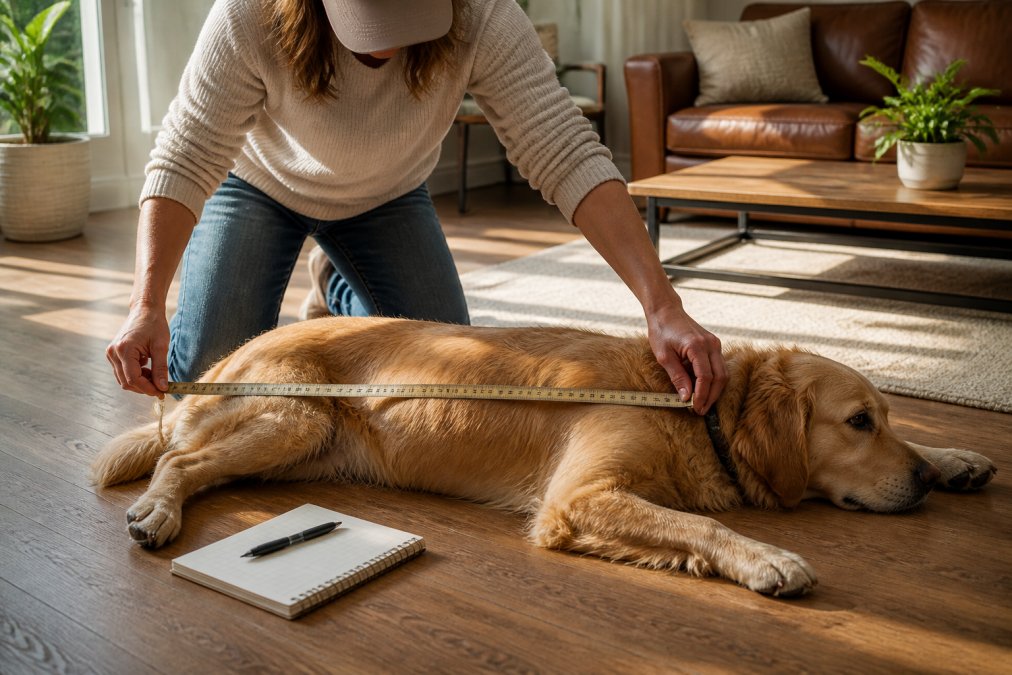
Measuring Length and Width
Measure your dog from the tip of the nose to the base of the tail while they're lying flat, not standing. Add 15-20 centimetres to that figure so there's room to stretch (akc.org). For width, measure across the shoulders and add roughly 10 centimetres.
Choosing the Right Bed Dimensions
Bed dimensions matter more than the label on the packaging. A "large" from one maker can be a "medium" elsewhere, so always compare the actual measurements in centimetres against your dog's numbers. For pets who like to sprawl, size up. For burrowers, a snugger fit supports the nesting instinct.
Orthopedic Dog Bed Benefits for Joint Health
Orthopedic dog bed benefits come down to one thing: pressure distribution. Memory foam and orthopedic foam contour to the body rather than pushing back against it, which reduces the load on hips, elbows, and spine during long rest periods. But "orthopedic" on a label means almost nothing on its own, the support level depends on foam density and firmness, and those two numbers are what separate a bed that helps a arthritic dog from one that just feels soft.
What Actually Makes a Bed Orthopedic
Three measurable properties matter:
- Density, measured in kilograms per cubic metre (kg/m³). Higher density means more foam per unit volume, which resists flattening over time. Beds marketed as orthopedic typically sit in the 30-55 kg/m³ range; budget "memory foam" beds often fall below 25 kg/m³ and collapse within months.
- Firmness / ILD (Indentation Load Deflection), how much force it takes to compress the foam. A lower ILD feels plusher; a higher ILD feels firmer and gives more support for standing up.
- Thickness, a 5 cm orthopedic layer is mostly marketing. For medium and large dogs, look for at least 8-10 cm of supportive foam so body weight doesn't bottom out against the floor (avma.org).
Firmness matters more than thickness for seniors.
Matching Support Level to the Condition
Different joint issues call for different foam profiles:
- Arthritis and hip dysplasia, firmer, higher-density foam (higher ILD) so the dog can push up without sinking. A bed with a firm base and a thin memory-foam comfort layer often works better than an all-memory-foam design.
- Post-surgery recovery, a low-profile, easy-to-step-onto bed with a removable, washable cover. Avoid bolsters that require lifting a leg over a wall.
- Senior dogs with muscle loss, medium-firm foam plus a non-slip base. Slipping on hardwood while getting up is often the bigger problem than the foam itself.
- Large and giant breeds, density is non-negotiable. A 40 kg dog compresses cheap foam flat in weeks; the same dog on a 45 kg/m³ foam bed can get years of use.
Signs Your Pet Needs an Orthopedic Bed
Watch for stiffness when rising, reluctance to jump onto furniture, or shifting position repeatedly through the night. Older dogs, larger breeds, and pets with arthritis or hip dysplasia are the clearest candidates. Senior pet care guidance generally recommends firmer, higher-density support rather than soft plush filling, since deep sinking can make it harder to stand up again.

A simple at-home test: press your palm firmly into the centre of the bed. If you can feel the floor through the foam, it's too thin for a large dog. If your hand leaves a deep print that doesn't spring back within a few seconds, the foam is too soft for a senior.
Best Pet Bed Materials for Durability
Durability comes down to three components: the cover fabric, the fill density, and the stitching. Cheap beds fail at the seams first, usually within months.
Look for durable stitching, a non-slip base, and a removable cover you can actually get back on after washing. Fill density determines how quickly a bed flattens; higher-density foam holds its loft far longer than loose fibre clusters.
Waterproof and Machine-Washable Fabrics
Water-resistant and machine-washable covers are non-negotiable for puppies, seniors, and any pet dealing with incontinence. A waterproof layer protects the foam core, which is the part you can't wash. Removable covers that survive a hot wash cycle will outlast the bed's filling in most cases.
| Material | Best For | Watch Out For |
|---|---|---|
| Memory foam | Joint support, seniors | Retains heat |
| Orthopedic foam | Arthritis, hip dysplasia | Heavier to move |
| Plush fibre | Nesting, warmth | Flattens quickly |
| Cooling gel | Overheating pets | Less cushioning |
| Waterproof shell | Puppies, incontinence | Can feel stiff |
Calming Beds for Anxious Pets
Calming beds for anxious pets work through enclosure, not magic. A bolster bed with raised sides mimics the feeling of being held, which lowers arousal in pets that startle easily or struggle with separation.
How to Introduce a Calming Bed
Place the bed in a quiet corner your pet already chooses on their own, not where you'd prefer it to go. Add a worn t-shirt with your scent. Let them investigate without pressure. Forcing a nervous pet onto a new bed usually backfires; most settle within a week if the bed sits in a safe, low-traffic spot near the family but not in the middle of it.
Matching a Pet Bed to Sleeping Styles
Sleeping habits should drive the purchase, not aesthetics. A dog that sprawls needs a flat, open surface. A cat that burrows wants walls. Getting this mismatch wrong is why so many beds end up ignored in a corner.
Nesting, Burrowing, and Sprawling
Nesting pets circle and paw before settling, and they do best with a nest-style bed with a soft, raised rim. Burrowers want semi-enclosed designs they can crawl into. Sprawlers need a flat mat with no sides at all. Watch your pet for three nights before buying; the pattern becomes obvious fast.
Temperature Regulation and Cooling Features
Temperature regulation matters most for double-coated breeds, flat-faced dogs, and pets in warm rooms. Breathable fabric and cooling gel layers help, but airflow around the bed does more than any single material. A waterproof blanket over the bed adds warmth in winter and protects the surface year-round.

Sustainability and Maintenance for the Right Pet Bed
Choosing the right pet bed isn't finished at checkout. What you do in the following months decides whether it lasts two years or ten, and most guides stop at "wash the cover." The foam core, which is the part that holds odours and allergens, almost never gets cleaned properly. This section covers both sides of the gap: how to pick materials that are actually sustainable, and how to deep-clean the parts nobody talks about.
Eco-Friendly Materials and Non-Toxic Fabrics
Non-toxic materials matter because pets chew, lick, and sleep against these surfaces for hours daily. But "eco-friendly" is loosely regulated in pet products, so look for specific signals rather than green imagery:
- Certifications to look for, OEKO-TEX Standard 100 (tests for harmful substances in textiles), CertiPUR-US (foam free from heavy metals, formaldehyde, and certain flame retardants) (certipur.us), and GOTS (organic cotton). These are third-party verified, not self-declared.
- Fill materials, natural latex, organic cotton, wool, and recycled PET fibre are common lower-impact options. Wool is naturally odour- and moisture-resistant, which reduces how often you need to wash.
- Covers, hemp, organic cotton, and linen biodegrade better than polyester blends, though they wear faster against chewers. A recycled-polyester canvas is a reasonable middle ground for heavy chewers.
- What to avoid, vague "eco" claims with no certification, antimicrobial treatments that are often pesticide-based, and synthetic fragrances added to "fresh-smelling" covers.
Sustainable choices here are usually the same ones that hold up better over time, natural fibres breathe, wool resists odour, and certified foams tend to be denser than the cheapest alternatives.
Deep-Cleaning the Foam Core (The Step Most Guides Skip)
Washing the cover is step one. The foam core is where urine, saliva, dander, and dust mites accumulate, and it can't go in a washing machine. Here's a safe protocol:
- Strip and vacuum. Remove the cover and vacuum both sides of the foam with an upholstery attachment. This lifts surface dander and hair before any liquid touches the foam.
- Spot-treat stains. Mix a small amount of mild enzyme-based pet cleaner with cool water. Dab, don't soak, the stain with a clean cloth. Enzyme cleaners break down urine and saliva proteins that regular detergent leaves behind.
- Deodorise with baking soda. Sprinkle a thin layer of baking soda over the foam, let it sit for 30-60 minutes, then vacuum it off. For stubborn odours, a light dusting of food-grade diatomaceous earth left overnight can help, but vacuum thoroughly afterwards.
- Air dry completely. Stand the foam on its edge in a well-ventilated area, ideally outdoors in shade, for at least 24 hours. Sunlight kills some odour-causing bacteria but direct sun can degrade foam over time, so shade is safer.
- Never machine-wash or tumble-dry foam. Heat and agitation break down the cell structure and the bed flattens permanently.
For pets with allergies or incontinence, repeat the vacuum-and-baking-soda step monthly, and wash the cover weekly rather than every two to four weeks.
Replacement Schedules and Wear Signals
Even well-cared-for beds have a lifespan. Replace the bed when:
- The foam no longer springs back within a few seconds after you press it.
- The cover has tears you can't repair, especially near seams where chewing starts.
- There's a persistent odour that returns within days of cleaning, usually a sign the foam core has absorbed urine past the point of cleaning.
- The bed has visibly flattened in one spot, which means the foam has lost its supportive structure.
Frequently Asked Questions
How do I choose the right dog bed size for my dog?
Measure your dog from the tip of the nose to the base of the tail, then add 15 to 30 centimetres for stretching room. For curling sleepers, a bed that matches their curled length works, but most dogs prefer extra space. Always check the bed's internal dimensions, not the outer frame, and size up for puppies who are still growing.
What dog bed features do veterinarians recommend for joint health?
Look for pressure-relief properties, removable covers for hygiene, and a non-slip base. For dogs with arthritis or hip dysplasia, a low-entry design helps them get on and off without strain. The Pet Grove's CozyNest Plush Pet Bed offers a supportive nest shape that suits smaller dogs and cats.
What materials are best for pets with allergies?
Choose hypoallergenic fabrics like cotton, fleece, or tightly woven microfibre, and avoid beds treated with chemical flame retardants or dyes. Look for machine-washable covers, because dust mites and dander build up quickly. A waterproof inner liner also stops urine and saliva from soaking into the fill, which can trigger reactions. Wash the cover weekly in hot water to keep allergens under control.
How often should you replace a pet bed?
Most pet beds last one to three years depending on material quality and how often you wash them. Replace the bed when the fill loses loft, develops lumps, or stops springing back. If your pet has incontinence or the bed has been through repeated washing, check for mildew or persistent odours. A durable option like the Mora Pets Reversible Crate Pad or a waterproof blanket from The Pet Grove can extend the life of your setup.


