

Benefits of Plush Beds for Dogs: A 2026 Guide
Table of Contents
- Why Dogs Need a Dedicated Bed
- Benefits of Plush Beds for Dogs
- Orthopedic vs Plush Dog Beds: Key Differences
- The Benefits of Bolstered Dog Beds
- Maintaining Plush Dog Bed Hygiene
- How to Choose the Right Plush Bed for Your Dog
- Frequently Asked Questions
Last Updated: September 10, 2026
Why Dogs Need a Dedicated Bed
Dogs sleep between 12 and 14 hours a day, and where they spend that time shapes their joint health, mood, and behavior (akc.org). A dedicated bed gives a dog a consistent, supportive surface that a couch cushion or bare floor cannot match.
This guide breaks down the benefits of plush beds for dogs, from anxiety relief to joint support, so you can choose the right bed with confidence.
The case for a dedicated bed rests on three practical points:
- Pressure distribution. Hard floors concentrate weight on elbows and hips. Cushioned surfaces spread that load.
- Temperature control. Raised, insulated bedding keeps a dog warmer in winter and cooler in summer than tile or concrete.
- Territorial security. A bed that belongs to the dog becomes a predictable safe zone, which matters most for rescue dogs adjusting to a new home.
What most owners miss is that a bed is not furniture. It is part of a dog's daily health routine, and upgrading it is one of the cheapest interventions available.
Benefits of Plush Beds for Dogs
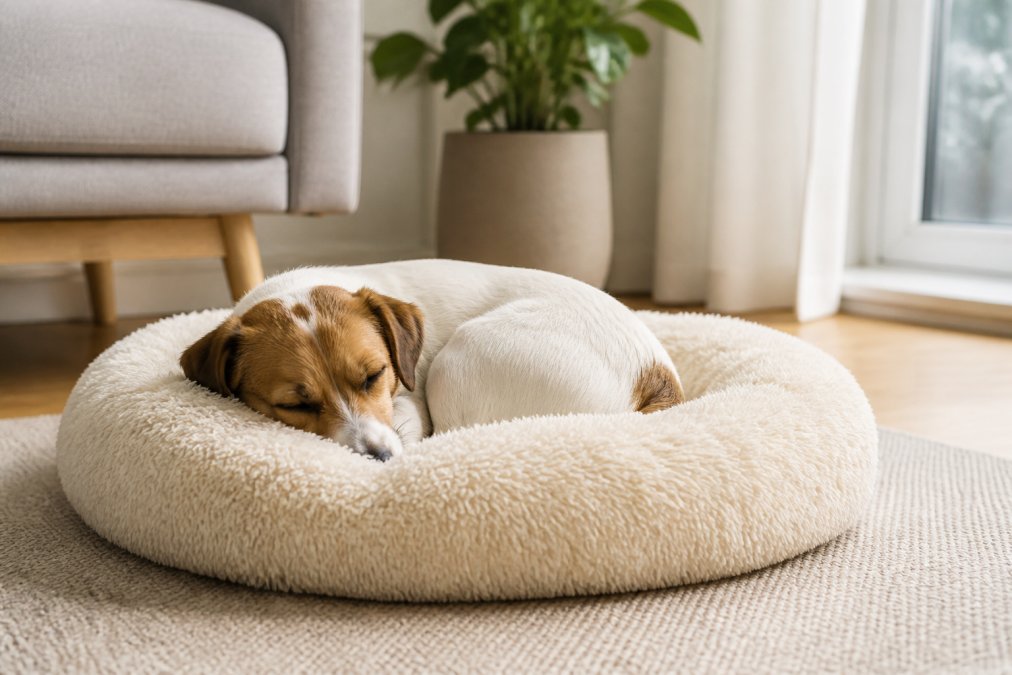
Plush beds deliver measurable comfort advantages: softer surface contact, better heat retention, and a nesting shape that satisfies a dog's natural instinct to curl and burrow. For anxious dogs and seniors, those qualities translate directly into longer, more restorative sleep. But the real case for plush goes deeper than "it feels nice", it sits at the intersection of behavioral biology, thermal regulation, and pressure management.
The Behavioral Science of Nesting and Denning
Dogs are descended from canids that raised litters in earthen dens, enclosed, insulated spaces that offered both warmth and protection from predators. That instinct did not disappear with domestication. Animal behaviorists commonly describe a "denning drive" that persists in modern dogs, which is why so many dogs circle before lying down, paw at blankets, or wedge themselves under furniture to sleep.
A plush bed with raised edges or a nest-style bowl mimics the physical parameters of a den: a defined perimeter, a soft floor, and a sense of enclosure. The result is not just coziness, it is a nervous-system signal that the dog is off-duty. Many trainers and veterinary behaviorists note that dogs with separation anxiety, thunderstorm phobia, or generalized anxiety settle faster when they have a consistent, enclosed resting spot that is theirs alone (aspca.org). If your dog paces, whines, or follows you from room to room, a plush bed with bolstered edges can give them somewhere to decompress.
This is the angle most "benefits of plush beds" articles skip: the bed is not just soft, it is a behavioral tool. The denning effect is why plush can be particularly effective for anxious dogs even when compared to equally cushioned flat mats.
Thermal Regulation: Why Plush Works in Winter and How to Adapt It for Summer
Plush fabric, typically polyester, sherpa, or faux fur, traps air within its pile. That trapped air is an insulator, which is why plush beds feel warm within minutes of a dog lying down. For thin-coated breeds (greyhounds, whippets, Chihuahuas), senior dogs with poor circulation, and puppies that struggle to hold body heat, this is a genuine welfare benefit, not a luxury.
The same property becomes a liability in summer or for double-coated breeds. A dog that cannot dissipate heat through the bed surface will seek out tile, concrete, or a cool corner instead. The practical fix is not to abandon plush but to use it seasonally: a reversible bed with a plush side and a cooler canvas or mesh side lets you flip the surface as temperatures change. In hot climates, a flat reversible mat often works better than a bolstered nest because it allows more airflow around the body.
A common pattern among owners in four-season climates is to keep a plush nest for winter and a raised cot or reversible mat for summer, rotating the bed rather than replacing it. That approach gets more use out of each bed and keeps the dog comfortable year-round.
Pressure Distribution and Joint Comfort
Soft cushioning reduces pressure on elbows, hips, and shoulders, which matters for dogs with arthritis or hip dysplasia (vcahospitals.com). Plush beds are not a substitute for orthopedic foam, dense memory foam holds joints in alignment in a way loose fill cannot, but they offer meaningful cushioning for dogs without diagnosed joint disease, and they can be a better choice for dogs who refuse to settle on firmer foam.
Senior dog care deserves special attention here. Older dogs lose muscle mass and sleep more, so the surface they sleep on carries more weight in their overall comfort. A plush bed with adequate material density keeps joints from resting directly against hard floors. The key variable is fill density: a bed stuffed with loose, low-density fiber will compress flat within weeks and stop providing pressure relief, while a bed with denser fill or a foam base underneath the plush layer will hold its shape longer.
Orthopedic vs Plush Dog Beds: Key Differences
The orthopedic vs plush dog beds comparison comes down to one question: does your dog need structural support or surface comfort? Orthopedic beds use dense memory foam to hold joints in alignment. Plush beds use softer fill to maximize warmth and coziness.
| Feature | Orthopedic Beds | Plush Beds |
|---|---|---|
| Core material | Memory foam, high-density foam | Polyester fiber, plush fabric |
| Best for | Arthritis, hip dysplasia, seniors | Anxiety, warmth, puppies, light sleepers |
| Firmness | Firm, supportive | Soft, yielding |
| Heat retention | Moderate | High |
| Washability | Removable covers common | Removable covers common |
| Typical lifespan | Longer, foam holds shape | Shorter, fill compresses over time |
Neither option is universally better. A dog with arthritis management needs will do better on orthopedic foam. A healthy young dog who loves to burrow will get more out of a plush nest. Some owners use both: orthopedic for the crate, plush for the living room.
The Benefits of Bolstered Dog Beds
The benefits of bolstered dog beds center on head and neck support. Raised edges give a dog something to rest their chin on, which relieves neck strain and reinforces the denning behavior that helps anxious dogs relax.
Bolstered designs also help with sleep quality in a way flat mats cannot. Dogs naturally lean against surfaces when they sleep, and a bolster gives them that contact without pressing against a wall or furniture. For older dogs, the raised edge doubles as a handhold when they stand up, reducing strain on the hind legs.
One caveat: bolsters trap heat. In warm climates or for double-coated breeds, a flat reversible mat may be the better summer option.
Maintaining Plush Dog Bed Hygiene
Maintaining plush dog bed hygiene is simpler than most owners expect, but it requires a routine tuned to the fabric. Plush pile, whether polyester, sherpa, or faux fur, holds dander, dust mites, and odor more readily than smooth materials because the fibers create surface area for particles to cling to. Weekly attention keeps the bed pleasant, extends its life, and protects dogs with allergies or sensitive skin.

Most guides stop at "wash the cover." The gap is in the details: how to clean deep-pile plush without matting the texture, and how to know when a bed is past saving.
A Fabric-Specific Cleaning Routine
- Shake the bed outdoors twice a week to remove loose hair and dander. This is the single highest-impact step because it removes the bulk of debris before it works into the pile.
- Vacuum the surface weekly with an upholstery attachment. Use low suction and work in the direction of the nap to avoid pulling the fibers. A rubber pet-hair brush works well for embedded hair on sherpa and faux-fur surfaces.
- Wash the cover every one to two weeks in cold water on a gentle cycle. Cold water protects both the fabric and any waterproof backing. Use a pet-safe, fragrance-free detergent; harsh detergents and fabric softeners leave residue that can irritate skin and break down the pile.
- Dry thoroughly. Damp fill breeds mildew, and mildew odor is nearly impossible to remove once it sets in. Air-dry or use a low-heat setting, and check the cover is fully dry before your dog uses it.
- Replace the bed once the fill stops springing back. A compressed bed no longer provides pressure relief, and no amount of washing will restore it.
How to Wash Deep-Pile Plush Without Ruining the Texture
The most common mistake owners make is treating plush like cotton. Deep-pile fabrics mat when they are agitated too aggressively, dried too hot, or washed with heavy items that crush the fibers.
A few practical rules:
- Wash plush covers alone or with other soft items, not with towels, jeans, or anything with zippers that can snag the pile.
- Turn the cover inside out before washing to protect the outer surface.
- Skip the dryer for high-pile plush. High heat melts synthetic fill and warps the shape permanently. If you must use a dryer, choose the lowest heat setting and remove the cover while it is still slightly damp, then let it finish air-drying.
- Restore the nap by hand. Once dry, brush the pile with your fingers or a soft-bristle brush to lift flattened fibers. This takes a minute and makes a visible difference.
- Spot-clean between washes. For small accidents, blot with a damp cloth and a diluted pet-safe enzyme cleaner rather than running a full wash cycle, which wears the fabric faster.
Choosing a Bed That Is Actually Washable
Choosing a bed with a removable, machine-washable cover changes the math entirely. A removable cover turns a chore into a five-minute task, and a hypoallergenic fill reduces reactions in sensitive dogs. When shopping, check three things: whether the cover has a full-length zipper (not a partial one that makes removal a struggle), whether the fill is encased in its own liner (so you can wash the cover without the fill spilling), and whether the fabric is rated for machine washing on the care label.
Bedding maintenance is also a health measure. A consistently clean bed lowers the risk of skin irritation, hot spots, and allergen buildup in your dog's sleeping environment. Dogs with allergies often improve noticeably when their bed is washed on a regular schedule rather than only when it looks dirty.
How to Choose the Right Plush Bed for Your Dog
The right plush bed matches your dog's size, sleeping position, and health status. Start with measurements, then match the shape to how your dog actually sleeps.
A quick size guide:
- Measure your dog nose to tail while stretched out, then add 15-20 cm of clearance.
- Curler or burrower? Choose a nest-style bed with raised sides.
- Stretcher? Choose a flat mat or rectangular bed with a non-slip base.
- Senior or arthritic? Prioritize material density and a supportive foam layer over pure plush.
- Puppy? Choose a washable, reversible mat that can grow with them through puppy development.
Fabric matters too. Breathability keeps a dog from overheating, while plush fabric maximizes warmth for thin-coated breeds. If your dog sleeps in multiple spots, a reversible pad with a waterproof backing protects furniture while keeping the sleeping surface soft.
For owners who want a head start, The Pet Grove carries plush options built around these exact criteria. The CozyNest Plush Pet Bed uses a nest-style design suited to curlers and small dogs. For a flatter, reversible option, the Mora Pets Ultra Soft Reversible Dog Bed Crate Pad supports the vertebrae and comes in a machine-washable build. And if your dog sleeps on the couch, the CozyShield Waterproof Pet Blanket adds a waterproof, sherpa-soft layer that protects furniture.


Frequently Asked Questions
Do dogs really need a plush bed, or will any soft surface do?
A dedicated plush bed gives your dog a consistent, supportive place to rest. Unlike a couch or human bed, it offers cushioning and warmth tailored to their size. Plush beds also provide a sense of security, especially for anxious dogs. If your dog often curls up on your furniture, a plush bed can redirect that behavior and give them their own comfortable spot.
How do plush beds compare to orthopedic beds for joint health?
Orthopedic beds use dense memory foam to support joints and pressure points, which is helpful for senior dogs or those with arthritis. Plush beds focus on softness and warmth, offering comfort for dogs without joint issues. Some plush beds include a supportive foam base. If your dog has hip dysplasia or arthritis, consider a bed that combines both: a plush surface over orthopedic foam.
Are plush beds easy to clean and maintain?
Most plush beds come with removable, machine-washable covers. Maintaining plush dog bed hygiene involves washing the cover every two weeks and spot-cleaning stains promptly. Choose a bed with a durable, hypoallergenic fabric and a non-slip base. Regular cleaning reduces allergens and keeps the bed fresh. Always check the care label before washing.
What are the main benefits of plush beds for anxious dogs?
Plush beds offer anxiety relief by providing a secure, cozy space that mimics a den. The soft fabric and bolstered edges create a sense of security, helping dogs relax. Nesting instinct encourages them to dig and circle before lying down, which plush beds accommodate well. This can reduce stress and improve sleep quality, especially for rescue dogs or those with separation anxiety.
Choosing the right bed is one of the simplest ways to improve your dog's daily comfort, but it only works if the bed actually fits how they sleep. The Pet Grove curates premium pet supplies with exactly that in mind: plush beds, washable mats, and waterproof blankets chosen for comfort, hygiene, and durability, all with free shipping to your door. Browse the collection and give your dog a sleeping spot worth curling up in.


