

Kohapet vs Premium Pet Brands: Full Comparison
Table of Contents
- Kohapet vs Premium Pet Brands: What Sets Them Apart
- Key Metrics Comparison Table
- Best Limited Ingredient Dog Food Brands Explained
- Ingredient Quality and Sourcing Standards
- What to Look for in Premium Pet Food Labels
- How to Transition Your Pet to a New Diet
- Cost-Per-Calorie Analysis and Long-Term Value
- Which Premium Brand Should You Choose?
- Frequently Asked Questions
Last Updated: September 1, 2026
Kohapet vs Premium Pet Brands: What Sets Them Apart
When you're shopping for premium pet food, the choices can feel overwhelming. The market is flooded with brands claiming superior nutrition, better digestion, and healthier coats. But here's what matters: not all premium pet brands are created equal. Some focus on limited ingredient diets for sensitive stomachs, others emphasize novel proteins, and a few genuinely prioritize sourcing transparency and digestibility over marketing hype.

This guide from The Pet Grove breaks down how premium pet brands compare, and where each excels. We've analyzed ingredient quality, sourcing standards, nutritional profiles, and real-world outcomes to help you understand what you're actually paying for when you choose one premium brand over another.
Key Metrics Comparison Table
When evaluating premium pet brands, these metrics matter most:
| Metric | What It Tells You | Why It Matters |
|---|---|---|
| Meat Content Percentage | Primary protein source quality | Higher meat % = better amino acid profile |
| Novel Protein Options | Hypoallergenic formulations | Critical for dogs with food sensitivities |
| Grain-Free vs. Grain-Inclusive | Digestive approach | Grain-free supports sensitive stomachs; grains add fiber |
| Fillers & By-Products | Ingredient transparency | Lower fillers = higher nutrient density |
| Bioavailability Rating | Nutrient absorption | Better absorption = smaller portions needed |
| Cost Per Calorie | Long-term value | Accounts for portion size and feeding efficiency |
| Stool Consistency Feedback | Digestive health indicator | Firm stools suggest good digestibility |
The products available through The Pet Grove, including Natural Balance Limited Ingredient Diet Sweet Potato & Bison Recipe ($34.92 for 4 lbs), Merrick Healthy Grains for Small Breeds ($25.04 for 4 lbs), and Hill's Science Diet Large Breed Puppy ($59.68 for 15.5 lbs), each address different needs within the premium market. Understanding these metrics helps you move past marketing claims to actual nutritional value.

Best Limited Ingredient Dog Food Brands Explained
Limited ingredient diets serve a specific purpose: they reduce the number of food components to identify and eliminate potential allergens. For dogs with food sensitivities or digestive issues, this approach works because it narrows down what might be causing reactions.
Natural Balance's Limited Ingredient Diet uses bison as the sole animal protein source, paired with sweet potatoes for fiber and digestive support. This formula is designed specifically for dogs with sensitive stomachs or skin irritation. The single-protein approach means fewer potential triggers, making it easier to identify if your dog reacts to the food or to something else in their environment.
Merrick Healthy Grains takes a different approach by including multiple ingredients but emphasizing whole grains like oats, which promote healthy digestion. This works well for dogs without severe allergies who benefit from the fiber content and nutrient density that grains provide. The formula includes glucosamine and chondroitin for joint support, a detail that matters for aging dogs or large breeds prone to hip dysplasia.
Hill's Science Diet Large Breed Puppy focuses on life-stage nutrition, incorporating DHA from fish oil for brain and eye development (peer-reviewed research). This matters because large breed puppies have different nutritional requirements than adult dogs, they need controlled calcium and phosphorus to support proper bone development without growing too quickly, which can stress developing joints.

The distinction matters: limited ingredient diets work best for dogs with confirmed sensitivities, while grain-inclusive premium formulas work better for dogs without allergies who need the nutritional profile that whole grains provide. Neither is universally "better", it depends on your dog's digestive health and food history.
Ingredient Quality and Sourcing Standards
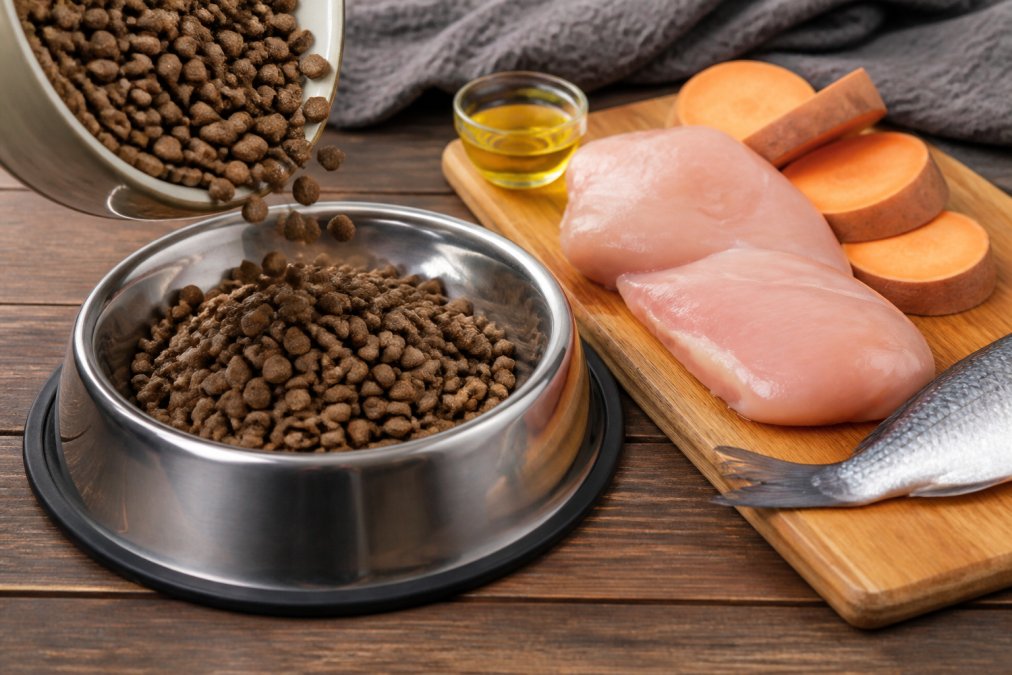
The ingredient list tells you what's in the food, but the sourcing standards tell you whether those ingredients are actually premium. This is where many brands cut corners.
Natural Balance emphasizes their "Feed with Confidence" program, which includes rigorous batch testing from start to finish. Every batch is tested for safety, this matters because contamination or inconsistency can cause digestive upset or worse. The bison protein in their Limited Ingredient Diet is a novel protein, meaning it's less common in dog foods and therefore less likely to trigger sensitivities in dogs with chicken or beef allergies.
Merrick's formula includes real deboned chicken as the first ingredient, which is stronger than "chicken meal" (a rendered, concentrated protein source). The distinction matters: deboned chicken retains more moisture and delivers a more complete amino acid profile. The inclusion of ancient grains like oats adds fiber and micronutrients that support digestive health.
Hill's Science Diet carries veterinarian recommendations because their formulations are backed by clinical research. The large breed puppy formula specifically addresses the calcium-to-phosphorus ratio that prevents developmental orthopedic disease, a real concern for breeds prone to hip dysplasia (aafco.org). This level of targeted nutrition requires more rigorous formulation than generic "premium" foods.
What separates these from lower-tier premium brands: transparency about sourcing. Many premium brands use vague language like "meat by-products" or "poultry meal" without specifying the source. The best brands name their protein sources, disclose their suppliers, and test for contaminants. This costs more, which is why truly premium brands command higher prices.
What to Look for in Premium Pet Food Labels
Reading a pet food label requires understanding the guaranteed analysis section, the small print that shows minimum protein, fat, fiber, and moisture percentages. This is where marketing claims meet actual nutrition.
Protein content matters, but percentage alone doesn't tell the whole story. A food with 30% protein from chicken is nutritionally different from 30% protein from corn gluten meal. The first delivers complete amino acids; the second delivers filler. Look for named meat sources (chicken, beef, bison, fish) rather than generic "meat meal" or "poultry by-products."
Fiber content affects stool consistency and digestive health. Most premium foods range from 3-5% fiber. Higher fiber supports digestive regularity; lower fiber suits dogs that need easier digestion. Sweet potatoes and oats are premium fiber sources because they also deliver micronutrients. Cellulose or "powdered cellulose" is a cheaper filler that provides bulk without nutritional value.
Moisture content matters for digestibility. Dry kibble typically contains 10-12% moisture. Wet or canned foods contain 75%+ moisture. Neither is inherently better, but they affect portion sizes and cost-per-calorie calculations. A dog eating dry food consumes fewer calories per serving than one eating wet food, so direct price comparisons are misleading.
Look for artificial preservatives to be absent. Premium brands use vitamin E (tocopherols) or vitamin C (ascorbic acid) as natural preservatives. Avoid BHA, BHT, and ethoxyquin, these synthetic preservatives are cheaper but associated with health concerns in long-term feeding (the FDA).
The guaranteed analysis also lists AAFCO certification (Association of American Feed Control Officials). This means the food meets minimum nutritional standards, but it doesn't distinguish between premium and mediocre formulations. AAFCO certification is a baseline, not a quality marker.
How to Transition Your Pet to a New Diet
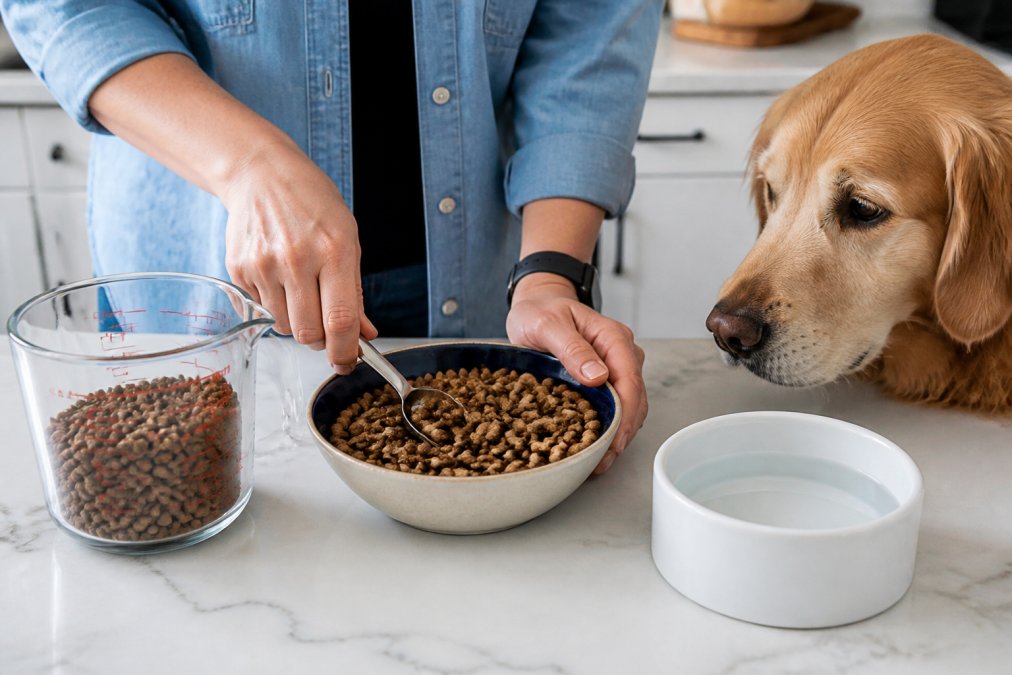
Switching foods too quickly causes digestive upset, diarrhea, vomiting, or constipation. A gradual transition allows your dog's digestive system to adjust to new ingredients and sourcing.
The standard transition takes 7-10 days. Start by mixing 25% new food with 75% old food for 2-3 days. If your dog shows normal stool consistency and no vomiting, move to 50/50 for the next 2-3 days. Then 75% new with 25% old for 2-3 days. Finally, 100% new food.
If your dog has a sensitive stomach or digestive history, extend the transition to 14 days and move through the percentages more slowly. Some dogs need a full week at each stage.
Watch for stool consistency changes. Firm stools suggest good digestibility; loose stools or diarrhea mean the transition is moving too fast or the food doesn't suit your dog. If digestive upset occurs, stay at the current percentage for an additional 3-5 days before advancing.
For dogs with food sensitivities, introduce the new food during a period when you can monitor closely, ideally a weekend or when you're home. This lets you catch any reactions early. Keep your dog's environment and routine stable during the transition; stress can compound digestive sensitivity.
Cost-Per-Calorie Analysis and Long-Term Value
This is where many pet owners make poor decisions. Comparing prices per bag is misleading because calorie density and portion size vary dramatically between brands.
Natural Balance Limited Ingredient Diet at $34.92 for 4 lbs works out to roughly $8.73 per pound. Hill's Science Diet at $59.68 for 15.5 lbs is $3.85 per pound. On face value, Hill's looks cheaper. But calorie density matters: a dog eating the denser Hill's formula needs smaller portions, so the per-serving cost narrows significantly.
Calculate cost per calorie instead. If Natural Balance delivers 400 calories per cup and your dog eats 2 cups daily, that's 800 calories for roughly $1.75 per day. If Hill's delivers 450 calories per cup and your dog eats 1.5 cups daily, that's 675 calories for roughly $0.95 per day. Hill's is actually cheaper per calorie, even though the bag costs more.
Long-term value also accounts for health outcomes. A premium food that improves stool consistency, reduces skin irritation, or increases energy levels may cost more upfront but saves money on veterinary visits for digestive issues or skin problems. A dog eating optimal nutrition requires fewer portions and shows fewer health problems over time.
Merrick Healthy Grains at $25.04 for 4 lbs sits in the middle. For small breed dogs, portion sizes are smaller, so the cost per serving is reasonable. For large breed dogs eating multiple cups daily, the cumulative cost becomes significant.
Consider your dog's life stage and health needs. A puppy like the Hill's formula targets requires specific nutritional ratios that justify premium pricing. An adult dog with no sensitivities might thrive on Merrick at lower cost. A dog with confirmed chicken allergies needs the novel protein in Natural Balance, regardless of price.
Which Premium Brand Should You Choose?
The answer depends on three factors: your dog's digestive health, their life stage, and your budget.
Choose Natural Balance Limited Ingredient Diet if: Your dog has confirmed food sensitivities, chicken or beef allergies, or a history of digestive upset. The single-protein approach and grain-free formula minimize potential triggers. Expect to pay more, but you're paying for targeted nutrition, not marketing.
Choose Merrick Healthy Grains if: Your dog has no known allergies and benefits from the fiber and micronutrients that whole grains provide. The small-breed formula works for dogs under 20 lbs. The joint support ingredients (glucosamine, chondroitin) matter for aging dogs or breeds prone to hip dysplasia. This option balances premium quality with reasonable cost.
Choose Hill's Science Diet if: You have a large breed puppy or a dog with specific life-stage nutritional needs. The DHA for cognitive development in puppies and the controlled mineral ratios for large breed growth prevention justify the premium pricing. This is the most research-backed option if your dog has clinical nutritional requirements.
The Pet Grove curates premium options specifically because not all "premium" brands deliver actual value. Our selection focuses on formulas that support digestive health, use transparent sourcing, and deliver measurable outcomes, not just higher prices.
Choosing the right premium pet brand means looking past price and marketing claims to actual ingredient quality, sourcing transparency, and digestive outcomes. The Pet Grove's selection of Natural Balance, Merrick, Hill's Science Diet, and Blue Buffalo formulas represents the best options for dogs with varying needs, from sensitive stomachs to life-stage-specific nutrition. Start with a gradual transition, monitor your dog's stool consistency and energy levels, and adjust based on real results. Premium pet nutrition is an investment in your dog's long-term health, and the right brand makes that investment measurable and worthwhile. Explore The Pet Grove's premium options with free shipping and find the formula that matches your dog's specific needs.
Frequently Asked Questions
What makes a premium pet brand different from standard grocery store pet food?
Premium pet brands prioritize ingredient quality, sourcing transparency, and nutritional density. They use named animal proteins (chicken, bison, fish) as primary ingredients rather than by-products or fillers. Premium formulas often include limited ingredient options for sensitive stomachs, and higher bioavailability of nutrients. Brands like Natural Balance and Merrick focus on specific health needs through novel proteins and grain-free options, whereas standard brands rely on corn, wheat, and artificial preservatives. The guaranteed analysis on premium labels typically shows higher protein percentages and better amino acid profiles, supporting long-term metabolic health and stool consistency.
Are limited ingredient diets actually necessary for dogs with food sensitivities?
Limited ingredient diets work well for dogs with documented food sensitivities or allergies. These formulas isolate single animal protein sources (like bison or duck) and remove common allergens such as chicken, corn, wheat, and soy. If your dog shows signs of digestive upset, itchy skin, or poor stool quality, a limited ingredient option may help identify the trigger ingredient. However, not all dogs need them. Standard premium formulas with high-quality proteins often work fine for healthy dogs without sensitivities. A veterinary nutritionist can help determine whether your pet genuinely benefits from a limited ingredient approach or if a regular premium formula suits them better.
How do I know if a pet food label is genuinely premium or just marketing?
Check the guaranteed analysis first: premium foods list protein percentages (typically 25-35% for dogs), fat content, and fiber levels. Look at the ingredient order, the first ingredient should be a named meat source, not meal or by-products. Avoid artificial preservatives, colors, and flavors. Transparent sourcing information indicates quality; brands that publish testing results and batch validation demonstrate commitment to safety. Compare meat content percentage to filler ratios. Premium brands often provide feeding guidelines by weight and life stage, and they list contact information for veterinary support. Natural Balance's 'Feed with Confidence' program and Hill's veterinarian recommendation are examples of third-party credibility signals.
What's the best way to switch my pet to a new premium food without digestive upset?
Transition gradually over 7-10 days to allow your pet's digestive system to adjust. Start by mixing 25% new food with 75% old food for 2-3 days, then move to 50/50 for another 2-3 days, then 75% new with 25% old, and finally 100% new food. Monitor stool consistency and appetite throughout. If your pet shows loose stools or vomiting, slow the transition further or consult your vet. This gradual approach helps prevent gastrointestinal upset and allows you to confirm the new food agrees with your pet before fully committing. Some pets with very sensitive stomachs may need a 14-day transition.
This article was written using GrandRanker


