

7 Best Grooming Tools for Shedding Dogs
Table of Contents
- Quick Comparison Table
- 1. EasyClean Self-Cleaning Pet Brush: Best for Daily Grooming
- 2. Slicker Brush: Best for Detangling and Undercoat Removal
- 3. Deshedding Rake: Best for Heavy Shedding and Double Coats
- 4. Metal Comb: Best for Sensitive Skin and Fine Coats
- 5. Pin Brush: Best for Long-Haired and Curly Coats
- 6. Undercoat Rake: Best for Matting Prevention
- How to Groom Dogs at Home Easily: Essential Techniques
Last Updated: August 23, 2026
Quick Comparison Table
| Tool | Best For | Key Feature | Price |
|---|---|---|---|
| EasyClean Self-Cleaning Pet Brush | Daily grooming & loose fur removal | Self-cleaning mechanism with stainless steel pins | $16.38 |
| Slicker Brush | Detangling & undercoat removal | Fine, short wires for mats and tangles | Varies |
| Deshedding Rake | Heavy shedding & double coats | Deep penetration to remove undercoat | Varies |
| Metal Comb | Sensitive skin & fine coats | Stainless steel teeth for gentle detangling | Varies |
| Pin Brush | Long-haired & curly coats | Widely-spaced pins for thick coats | Varies |
| Undercoat Rake | Matting prevention | Dual-blade design for undercoat management | Varies |
| Professional Grooming | Comprehensive care & extreme shedding | Expert handling & specialized equipment | Varies |
Shedding season transforms many dog owners into frustrated fur-collectors. Your furniture gets covered, your vacuum runs constantly, and your dog's coat becomes tangled. The real problem isn't that your dog sheds, it's that most people use the wrong tools and groom too infrequently.

At The Pet Grove, we've curated grooming tools specifically designed to tackle shedding at its source. The right tool makes the difference between a 10-minute grooming session and a 45-minute battle with mats and loose fur. Below are the 7 best grooming tools for shedding dogs, what makes each effective, and how to use them properly.
1. EasyClean Self-Cleaning Pet Brush: Best for Daily Grooming
The EasyClean Self-Cleaning Pet Brush ($16.38) is the workhorse of daily grooming. This brush removes loose fur efficiently while its self-cleaning mechanism makes cleanup painless, press a button and collected fur falls away instantly. The stainless steel pins work gently on both dogs and cats.
Most dog owners abandon grooming routines because cleanup is tedious. The EasyClean solves that friction point. You brush for 5-10 minutes, press the self-cleaning button, and you're done. For daily maintenance on dogs with moderate shedding, this is the best entry point.
2. Slicker Brush: Best for Detangling and Undercoat Removal
A slicker brush features short, fine wires close together on a flat or slightly curved surface. This design penetrates the topcoat to reach the undercoat beneath, where most shedding originates. For dogs with double coats or those prone to matting, a slicker brush is essential.
The slicker's fine wires catch tangles and loose undercoat that other brushes miss. Slicker brushes require technique, apply too much pressure and you can irritate sensitive skin or break healthy hair. For thick, double-coated breeds like Golden Retrievers, German Shepherds, or Huskies, a slicker brush is your primary tool during shedding season.
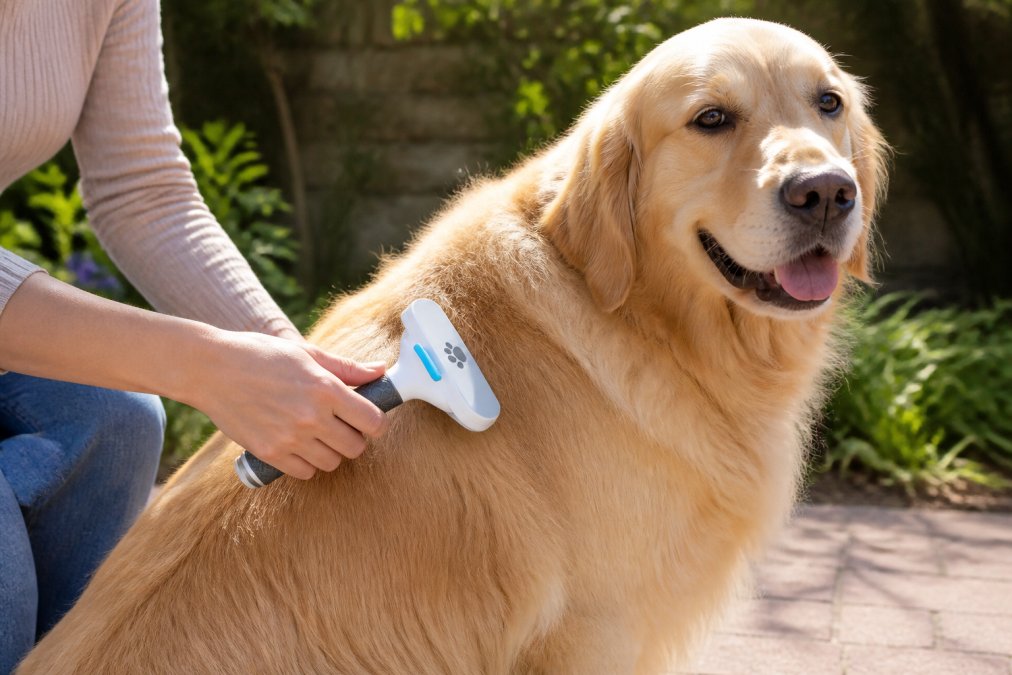
3. Deshedding Rake: Best for Heavy Shedding and Double Coats
A deshedding rake is engineered specifically to remove loose undercoat without damaging the topcoat. The teeth are spaced further apart than a slicker and often arranged in a double-row pattern, pulling out dead undercoat efficiently while leaving healthy topcoat intact.
For dogs that shed heavily, Labrador Retrievers, Malamutes, or any double-coated breed during spring and fall, a deshedding rake is the most effective tool available. A single 15-minute session can remove enough loose fur to fill a grocery bag (peer-reviewed research). Use gentle, short strokes following the direction of hair growth. A deshedding rake won't work well on single-coated dogs or short-haired breeds.
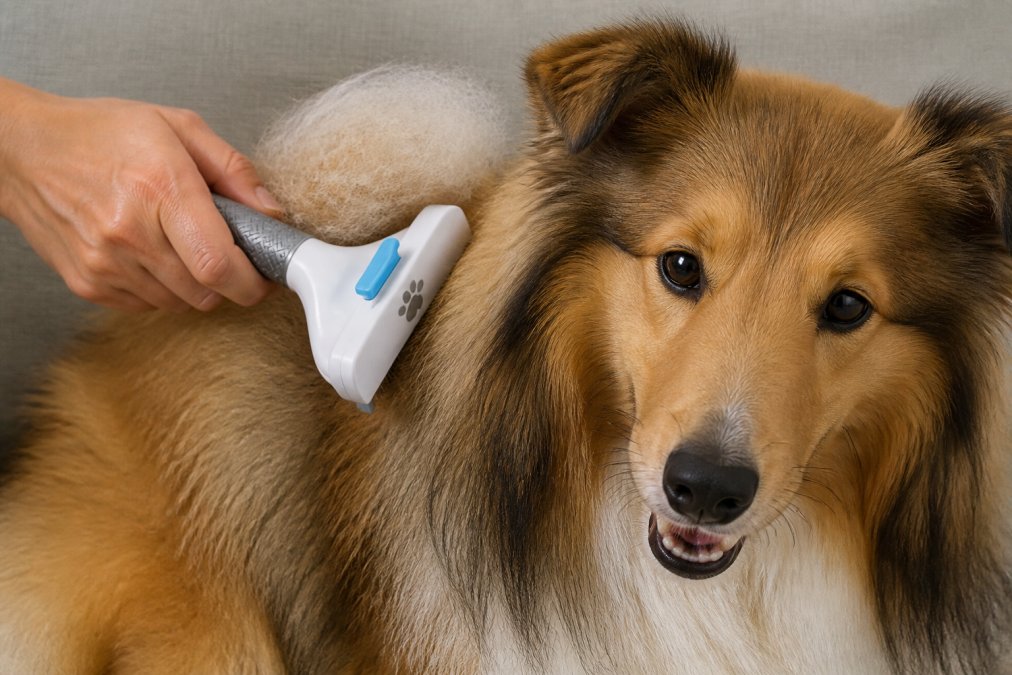
4. Metal Comb: Best for Sensitive Skin and Fine Coats
A metal comb with stainless steel teeth is the gentlest grooming tool available. The teeth are smooth, evenly-spaced, and won't snag or pull hair. For dogs with sensitive skin, allergies, or fine, delicate coats, a metal comb is often the only tool that won't cause irritation.
Metal combs excel at detangling specific problem areas. When you find a mat or tangle, a metal comb lets you work through it slowly without aggressive action. The drawback is speed, a metal comb won't remove loose fur as quickly as a slicker or deshedding rake. For maintenance grooming on sensitive dogs, it's ideal.
5. Pin Brush: Best for Long-Haired and Curly Coats
A pin brush has longer, more widely-spaced pins than a slicker, each topped with a small ball to prevent scratching. This design works well on long-haired and curly-coated dogs where you need to reach through the coat without creating friction or heat.
Pin brushes are gentler than slickers, making them suitable for dogs with moderate sensitivity. For breeds like Afghan Hounds, Shih Tzus, or Doodles, a pin brush is often the primary grooming tool. The limitation is penetration, a pin brush works primarily on the topcoat and outer undercoat.
6. Undercoat Rake: Best for Matting Prevention
An undercoat rake features a slightly different tooth arrangement designed specifically for prevention rather than heavy removal. Some have dual blades that work together to catch and remove undercoat in a single motion.
Used weekly on a double-coated dog, it prevents the matting and tangles that develop when loose undercoat accumulates. Prevention is always easier than correction. For rescue dogs or dogs with neglected coats, an undercoat rake won't solve severe matting, you'll need professional help for that.
How to Groom Dogs at Home Easily: Essential Techniques
Grooming your dog at home doesn't require professional training, but technique matters. Start with a dry coat. Moisture causes hair to tangle and makes it harder for grooming tools to catch loose fur.
Brush in the direction of hair growth. Use light to moderate pressure, let the tool do the work. Work systematically through the entire body, including the chest, belly, legs, and tail. Spend time on areas where mats commonly form: behind the ears, under the armpits, and around the rear end. For heavy shedders, groom in layers. Start with a deshedding rake to remove undercoat, then follow with a slicker brush to catch remaining loose topcoat.
Establish a routine. Grooming frequency depends on your dog's coat type and shedding level, but consistency matters more than intensity.
Invest in quality tools. The EasyClean Self-Cleaning Pet Brush ($16.38) from The Pet Grove offers premium materials at an accessible price. For dogs with sensitive skin, use the Clinical Care Hypoallergenic Pet Shampoo ($18.85) before grooming. Pair it with the Fresh Coat Pet Conditioner ($12.43) to reduce mats and tangles. After grooming, use the Tuff Pupper Quick-Dry Dog Towel ($27.48) to remove excess moisture.

Dog Grooming Tips for Heavy Shedders: Frequency and Routine
Heavy shedders require a different approach. Breeds like Golden Retrievers, German Shepherds, Labradors, and Huskies shed year-round with dramatic increases during spring and fall.
Groom heavy shedders at least twice weekly during peak shedding seasons (aaha.org). During off-season, once weekly is sufficient. Twice-weekly grooming for 15-20 minutes is more effective than a single monthly hour-long session.
For heavy shedders, start with a deshedding rake to remove bulk loose undercoat. Follow with a slicker brush to catch remaining loose topcoat. Finish with a metal comb to check for tangles. Bath your heavy shedder every 4-6 weeks using a gentle shampoo (aaha.org). During peak shedding season, consider supplementing home grooming with professional grooming every 6-8 weeks.
Track shedding patterns. Most dogs shed heavily in spring and fall as they transition between seasonal coats. Understanding your dog's pattern helps you adjust grooming frequency proactively.
Don't neglect dander and skin health. A dog with dry, irritated skin sheds more. Regular grooming stimulates natural oils and distributes them through the coat, improving skin health and reducing excessive shedding over time.
Understanding Coat Types: Single vs. Double Coats
Not all shedding is created equal. A dog's coat structure determines how much they shed and which tools work best.
Double-coated dogs have two layers: a longer, coarser topcoat and a shorter, dense undercoat. The undercoat provides insulation and is where most shedding originates. Breeds like Golden Retrievers, German Shepherds, Huskies, and Corgis have double coats and shed significantly.
Single-coated dogs have one layer of hair. Poodles, Doodles, and some terriers have single coats and shed less than double-coated dogs. A pin brush or metal comb is often sufficient for single-coated breeds. A deshedding rake is essential for double-coated dogs but ineffective on single-coated dogs.
Grooming Tools for Sensitive Skin: Special Considerations
Dogs with allergies, dermatitis, or naturally sensitive skin require a gentler grooming approach. The wrong tool can cause irritation, hair loss, or exacerbate existing skin conditions.
Metal combs are the safest choice for sensitive skin. The smooth, rounded teeth won't scratch or irritate, and you have complete control over pressure. Avoid tools with plastic bristles or rough textures. Pair grooming with the Clinical Care Hypoallergenic Pet Shampoo ($18.85), specifically formulated for sensitive skin with fragrance-free, soap-free ingredients. If grooming causes visible irritation, red patches, or hair loss, stop immediately and consult your veterinarian.
Managing Loose Fur and Dander: Beyond the Brush
Grooming removes loose fur, but managing the fur that falls out is part of the equation. Groom outside when possible. Wind carries loose fur away rather than depositing it on your furniture.
Use a grooming mat or blanket to contain loose fur. Invest in a high-quality vacuum designed for pet hair. Pet-specific vacuums have stronger suction and specialized attachments for furniture and stairs. Wash your dog's bedding weekly during heavy shedding seasons. Consider air purifiers with HEPA filters to capture fine dander and loose fur floating in the air.
The Tuff Pupper Quick-Dry Dog Towel ($27.48) from The Pet Grove helps manage moisture and loose fur post-bath. The ultra-absorbent microfiber collects excess water, and the towel is machine washable for easy cleanup.
The best grooming tool for your shedding dog depends on their coat type, shedding level, and skin sensitivity. Most dog owners benefit from having multiple tools: a daily brush like the EasyClean Self-Cleaning Pet Brush for maintenance, a slicker brush for detangling, and a deshedding rake for heavy undercoat removal. Consistency matters more than having the perfect tool, a dog groomed twice weekly with a basic brush sheds less than one groomed monthly with professional-grade equipment.
Start with The Pet Grove's curated selection of grooming essentials. The EasyClean Self-Cleaning Pet Brush ($16.38) makes daily grooming sustainable, while the Clinical Care Hypoallergenic Pet Shampoo ($18.85) and Fresh Coat Pet Conditioner ($12.43) prepare your dog's coat for effective grooming. With the right tools and a consistent routine, you'll dramatically reduce shedding and keep your dog's coat healthy and manageable year-round.

Frequently Asked Questions
What is the most effective tool for removing shedding dog hair?
The most effective tool depends on your dog's coat type. For double-coated breeds, a deshedding rake removes loose fur from the undercoat most efficiently. For single-coated dogs, a slicker brush works well. The EasyClean Self-Cleaning Pet Brush at $16.38 combines ease of use with stainless steel pins that remove loose fur while reducing cleanup time. For heavy shedders, pair your primary brush with a metal comb to catch remaining tangles and loose hairs.
How often should I use a deshedding tool on my dog?
Grooming frequency depends on shedding season and coat type. During peak shedding seasons (spring and fall), brushing more frequently can help manage loose fur. Outside shedding season, regular brushing maintains coat health and prevents matting. Start with shorter sessions to let your dog adjust, then extend as needed. Always brush gently to avoid damaging hair follicles or irritating sensitive skin.
What is the difference between a slicker brush and a deshedding rake?
A slicker brush has fine, short wires close together and works on the topcoat and outer undercoat, making it ideal for detangling and general grooming. A deshedding rake has longer, more widely spaced wires that penetrate deeper into the undercoat to remove loose fur at the root. Slicker brushes suit most coat types and daily use, while deshedding rakes are specialized for double-coated breeds during shedding season. Use a slicker brush first for detangling, then follow with a deshedding rake for thorough undercoat removal.
How do I choose the right grooming tool for my dog's coat type?
Match the tool to your dog's coat structure. Double-coated breeds (Labs, Golden Retrievers, Huskies) need a deshedding rake and slicker brush to manage undercoat. Single-coated dogs benefit from a pin brush or metal comb. Long-haired breeds require pin brushes to prevent matting, while short-haired dogs do well with rubber curry brushes. Dogs with sensitive skin need softer bristles and gentler pressure. Consider ergonomic handles for comfort during longer grooming sessions. The Fresh Coat Pet Conditioner ($12.43) helps reduce mats and tangles after brushing, making grooming easier regardless of coat type.
Can over-brushing a dog damage their coat?
Yes, over-brushing can damage hair follicles, cause skin irritation, and break healthy hair. Brush gently in the direction of hair growth and avoid irritated or broken skin. Use appropriate pressure for your dog's coat type and sensitivity level. Dogs with sensitive skin need extra care; the Clinical Care Hypoallergenic Pet Shampoo ($18.85) complements gentle grooming by soothing skin during bathing. If your dog shows signs of discomfort, skin redness, or hair loss, reduce brushing frequency and consult your veterinarian. Quality tools with rounded pins and proper technique minimize damage while maximizing loose fur removal.
This article was written using GrandRanker


